| 11/20/2025: Senate Prospects For 2026: Part Two, Voting Schemes and Pipe Dreams [RightDataUSA] | |||||||||||||||||||||||||||||||||||||||||||||||||||||||||||||||||||||||||||||||||||||||||||||||||||||||||||||||||||||||||||||||||||||||||||||||||||||||||||||||||||||||||||||||||||||||||||||||||||||||||||||||||||||||||||||||||||||||||||||||||||||||||||||||||||||||||||||||||||||||||||||||||||||||||||||||||||||||||||||||||||||||||||||||||||||||||||||||||||||||||||||||||||||||||||||||||||||||||||||||||||||||||||||||||||||||
We've already covered the eight U.S. Senate seats which have the greatest probability of changing hands in 2026. The list includes 3 seats currently held by Democrats and 5 which have GOP incumbents. Most of the other 27 Senate seats which will have elections next year appear to be perfectly safe for the party which holds them. A few others fall just short of "perfectly safe".
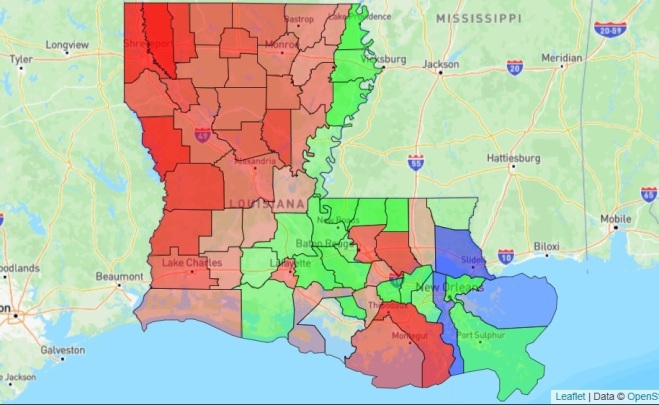
Louisiana gubernatorial jungle primary, 1987
Louisiana:
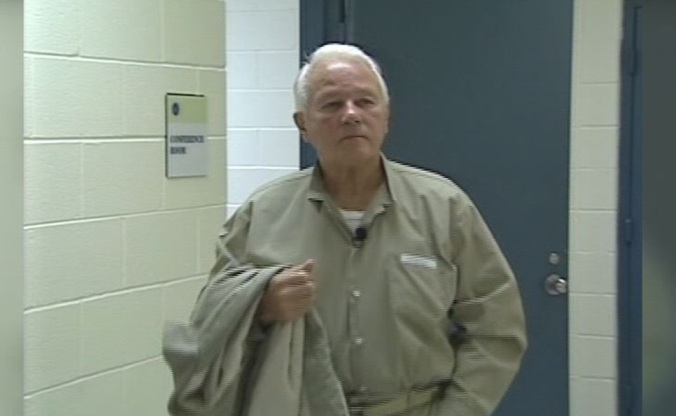
Photo of inmate No. 03128-095 from wwltv.com
What really triggered Edwards was the February, 1972 gubernatorial race, in which he first won the Democrat primary against over a dozen other candidates (but did not even get 25% of the vote) and then narrowly prevailed in a grueling runoff against Bennett Johnston and then had to face Republican David Treen in the general which turned out much closer than expected. Treen had cruised easily through the GOP primary and did not need to endure any runoff. So why, Edwards asked, should the vastly outnumbered Republican party be guaranteed a spot on a general election ballot like in every other state, while Democrats had to face as many as two bruising contests just to get to that same spot?
As of 2004 the tide had turned, and Democrats (and liberal Republicans) knew it. Then came the mass exodus of New Orleans Democrats as the result of Hurricane Katrina in 2005; New Orleans was already in population decline but the hurricane momentarily accelerated the process. From that point forward it has been Democrats who almost always find themselves on the outside in a general election, not simply because New Orleans temporarily lost about 100,000 potential voters, but because the general preference of Louisiana voters has done a 180-degree turn away from Democrats and towards Republicans. Since 2007 only Dirty Mary Landrieu in 2008 and John Bel Edwards (fluke wins in 2015 and 2019) have been able to prevail statewide as Democrats in Louisiana. Liberal Republicans like Bill Cassidy have (along with Democrats) lately decried the jungle primary, and in 2024 the state legislature passed a bill which reverts to closed, single-party primaries for elections for federal offices effective as of 2026; elections for state and local office in Louisiana will continue with the jungle primary. The new scheme is a "win" for liberals of both parties: Democrats get a guaranteed spot on a general election ballot; RINOs no longer need to deal with Democrats taking votes from them in a primary, and thus stand a better chance against real Republicans. In a supposedly "closed" GOP primary, Cassidy will receive a higher percentage of votes than he would in a jungle. He will be the winner if several conservative candidates split the right-wing vote while Cassidy has all of the left-wing votes for himself. Most likely, however, Cassidy will still need to survive a primary runoff. That won't be as difficult as it may sound. One very important provision of the new law which eliminated the jungle primary is that independent voters -- and there are plenty of those in Louisiana (nearly 30%) -- can cast a ballot in whichever primary they choose. Take a bunch of "moderate" independents, add in some Democrat voters who switch and become Republicans temporarily, and RINOs are suddenly far less endangered than they were before. If Cassidy's fate was decided only by true Republicans, it wouldn't be pleasant for him. Cassidy's #1 opponent at the moment is state Treasurer John Fleming, a 74-year-old Republican. Democrats have nobody worth mentioning. Fleming served 4 terms in the U.S. House from the 4th District from 2009-2016; the guy who replaced Fleming in that district in 2016 is now the Speaker of the House. Fleming is a very solid conservative, and if other conservatives stay out of the May, 2026 Senate primary, Fleming has an excellent chance to win. November would be a formality. But the primary will not be so simple, and that works to the advantage of RINO incumbent Cassidy because the non-RINO primary vote will be fractured. Other prominent candidates include first-term state Senator Blake Miguez, who is a moderate-conservative; and St. Tammany Parish councilwoman Kathy Seiden, who is a young, attractive Christian conservative. 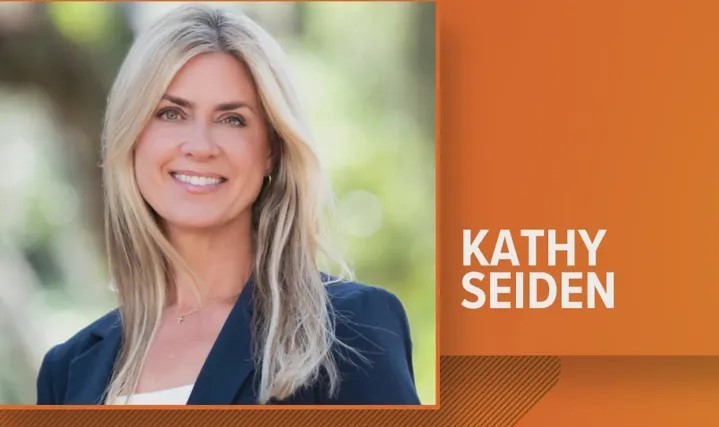
Photo credit: wwltv.com
Cassidy has a major cash advantage, Miguez and Fleming are building their war chests, and Seiden has only recently thrown her hat into the ring. Whoever wins the GOP primary will be Louisiana's next U.S. Senator. Miguez, though more of a centrist, will still take more votes from Fleming and Seiden than he will from Cassidy. Best case scenario is that at least one of the two actual conservatives makes the runoff. With one Democrat now guaranteed to be on the general election ballot (thanks again, Louisiana RINOs) billionaire ActBlue contributors may go all-out to try to steal this seat, but this is one state where it is very unlikely that they will succeed.
Alaska: 
Democrats have nobody yet for this race in what people falsely assume is a Republican state; the GOP has only 24% of voter registrations in Alaska while 59% are registered independents. But the Democrats believe (and left-wing polls back them up) that fake-moderate ex-congresswoman Mary Peltola would be a formidable opponent against incumbent Republican Dan Sullivan. Sullivan, an actual moderate, was first elected to the Senate in 2014 when he defeated incumbent Democrat Mark Begich and then was re-elected in 2020 by an unimpressive margin over big-spending liberal Al Gross.
Kentucky: 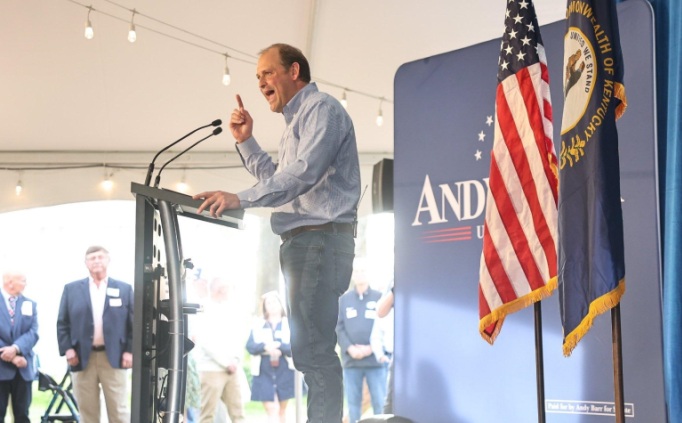
Photo credit: Lexington Herald Leader
The Bluegrass State is wide open due to the long-overdue retirement of Mitch McConnell. The best-known candidates in the Republican primary are moderate congressman Andy Barr and former Attorney General Daniel Cameron. Barr has represented the Lexington-area district in Congress since 2013 and he's turned what was once a marginal House seat into a rather safe one which Democrats no longer seriously go for in most elections; they are putting it back on their radar in 2026, however. Cameron, elected as A.G. in 2019, was seen by some on the right as insufficiently tough on Democrat crimes while in office, and his bid to move up to Governor ended dismally when he was totally outclassed (and vastly outspent) in 2023. There is also businessman Nate Morris running on the GOP side, and he is definitely the most conservative option of the three. Barr is currently the leader in the fundraising portion of the race.
A recent addition on the Democrat side, presumably for additional comic relief, is horse trainer Dale Romans. Horses are big in Kentucky, and this guy's full of as much horseshit as any of them. He also wants to be the W.C.H. candidate in the contest, and describes himself as an "independent" Democrat even as he spouts the same nonsense as all other (presumably non-independent) Democrats. Bernie Sanders is an "independent" too. McGrath is the most likely of the above to be the Democrat nominee, but nobody currently has any illusions that she will win. Morris may have a better shot than anticipated on the GOP side, but a squish like Barr probably has the best chance of winning a general election, and therefore the big money and big endorsements will be behind him. Cameron is currently being slimed with unproven allegations of misconduct while Attorney General, and he is also a proven statewide loser. Cameron appears to be the favorite to finish third in the GOP primary. Minnesota: 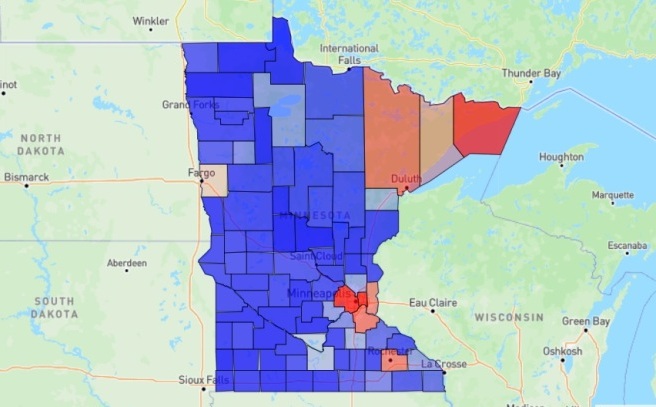
2024 presidential results in Minnesota
This state, like Virginia (see below) is nothing but a Republican pipe dream. The congressional delegation is always pretty well balanced, either 4-4 or 5-3 every election since 2000. The state House and state Senate are very close. Minnesota doesn't register voters by party, but a company whose business it is to estimate party breakdowns calculates that Minnesota is one-third Democrat, one-third Republican and one-third independent or minor parties. This may be an oversimplification, but the Twin Cities and their suburbs (at least the first two "rings") are terrible, the rest of the state is fine. The first part of that sentence is definitely true, anyway.
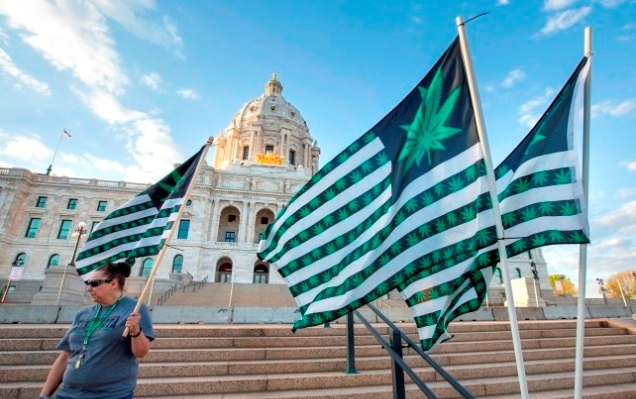
Photo credit: house.mn.gov
Speaking of "pipe dreams". . . one explanation for some of the previously close outcomes is -- or was -- the presence of doper parties on the ballot. The "Grassroots-Legalize Cannabis" party and the "Legal Marijuana Now!" party are both recognized political entities in Minnesota, but they ceased fielding candidates after 2022. That's because they no longer have any reason to do so; in 2023 the Democrat legislature passed a very lenient law which legalizes cannabis for any type of use, not just medicinal. The fact that the doper parties are now obsolete helps Democrats, because these parties were regularly siphoning off thousands of left-wing votes in major elections.
Republicans are pretending that they have a chance to pick up the Minnesota Senate seat in 2026. It is an open seat, being vacated by Democrat Tina Smith, who is retiring. Smith, who compiled a nearly 100% liberal rating while in the Senate, was first appointed in 2018 when Democrats forced another liberal Democrat, sexual predator Al Franken, to resign. Smith's most recent election in 2020 was a good example of how Democrats were once hindered electorally, as two stoner candidates combined to take 7.7% of the vote away from her. So Smith only won by about 5 points instead of 12 or 13 points. The 2026 Democrat primary will be between Lt. Governor Peggy Flanagan and congresswoman Angie Craig. Flanagan has some problems, such as financial improprieties in her office, and being endorsed by Bernie Sanders; Craig is one of those lifelong liberals who suddenly sprints hysterically towards the center when seeking higher office. There's a 98% chance (rounding down) that one of these two will be the next ultra-liberal U.S. Senator from the state of Minnesota. Ex-professional basketball player Royce White ran for the Senate in 2024 in Minnesota against Amy Klobuchar, and the Republican was stomped by over 15 points, a good example of a margin of Democrat victory when the dopers no longer split the left-wing vote. He is running again in 2026. White moved quickly across the political spectrum, going from left-wing hero in 2020 when he was leading Black Lives Matter protests after the death of "St. Floyd of Fentanyl" (White does have a history of mental illness); he's recovered from that, and is now described as a "right-wing populist". White has just as much chance of winning in 2026 -- none at all -- as he had in 2024. And he is the probable front-runner among Republicans, which shows just how much of a barren wasteland Minnesota is for the GOP. None of the state's 4 moderate Republican congressmen want any part of this race either. 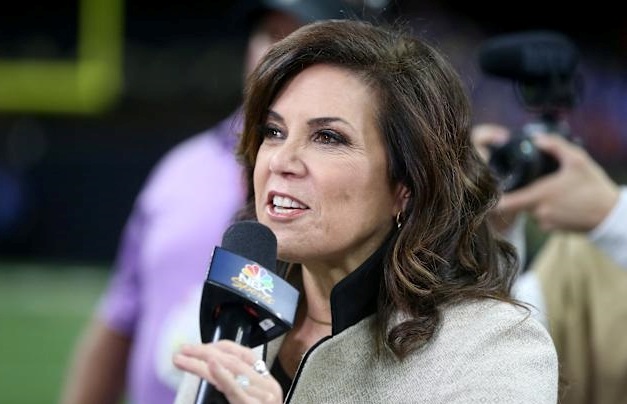
Photo credit: yahoo.com
This foregone conclusion of an election might be spiced up a bit if ex-sports broadcaster Michele Tafoya were to enter the race on the GOP side. Tafoya was a long-time sideline reporter for NFL games, and during her career she was employed by several networks including CBS, ESPN and NBC. She retired from that profession in January, 2022; the last game she worked was Super Bowl LVI.
Nebraska: 
Photo credit: Zach Wendling/Nebraska Examiner
Democrat-in-disguise Dan Osborn is the Great "Independent" Hope for the left in the state of Nebraska. Fresh off of a defeat in the 2024 Senate election against incumbent GOP squish Deb Fischer in which he came closer than some expected, Osborn is rested and ready to give it another go in 2026. Osborn took all of the Democrat money he could get in 2024, but concealed his true political identity by refusing to accept the Democrat party label which is repugnant in the Cornhusker State outside of Omaha and Lincoln. Not even including all of the supposedly-independent liberal cashflow coming from outside the state, Osborn's fundraising dwarfed that of Fischer. Numerous polls showed a close race in 2024, and some even had Osborn prevailing by a small amount. Osborn won the two big liberal cities and lost everywhere else; the final outcome was a 6.7% victory for the Republican. Only one or two forecasters actually got it right; the other polls (nearly all of which were paid for by Osborn's campaign) were nothing but wishful thinking, propaganda and hot air.
Virginia: One last word about a ridiculous GOP pipe dream state: there are probably some folks out there who are still in disbelief regarding the 2025 election results in Virginia. Unwilling to accept the reality that the Old Dominion is not remotely competitive anymore, they may think that outgoing Republican Governor Glenn Youngkin could somehow repeat his fluke win from 2021 in the 2026 Senate race against well-entrenched liberal Mark Warner. Youngkin is a good man, and he stood up just recently against Virginia Democrats' attempt (which will succeed) to gerrymander the state's congressional districts and disenfranchise Republicans, costing them 2 or perhaps 3 seats. Youngkin is not a stupid man, and to all indications will not be entering a Senate race that he is extremely unlikely to win. If Youngkin declines, Republican pickup chances of the Virginia Senate seat drop from maybe 20% to absolute zero. Drop the pipe, wake up from the dream, and look elsewhere for potential Republican pickups. Tags:
2026
Senate
Louisiana
Alaska
Kentucky
Minnesota
Nebraska
Virginia
| |||||||||||||||||||||||||||||||||||||||||||||||||||||||||||||||||||||||||||||||||||||||||||||||||||||||||||||||||||||||||||||||||||||||||||||||||||||||||||||||||||||||||||||||||||||||||||||||||||||||||||||||||||||||||||||||||||||||||||||||||||||||||||||||||||||||||||||||||||||||||||||||||||||||||||||||||||||||||||||||||||||||||||||||||||||||||||||||||||||||||||||||||||||||||||||||||||||||||||||||||||||||||||||||||||||||
| 11/13/2025: An Electoral S.A.T. Math Question: "2025 Is To 2017 As 2026 Is To ____ ?" [RightDataUSA] | |||||||||||||||||||||||||||||||||||||||||||||||||||||||||||||||||||||||||||||||||||||||||||||||||||||||||||||||||||||||||||||||||||||||||||||||||||||||||||||||||||||||||||||||||||||||||||||||||||||||||||||||||||||||||||||||||||||||||||||||||||||||||||||||||||||||||||||||||||||||||||||||||||||||||||||||||||||||||||||||||||||||||||||||||||||||||||||||||||||||||||||||||||||||||||||||||||||||||||||||||||||||||||||||||||||||
The election results from November 4, 2025 bear a striking resemblance to those from November 7th of 2017. In the aftermath of the 2025 Democrat sweeps in Virginia, New Jersey, New York City -- and elsewhere -- most right-wing analysts are trying to appear calm as they whistle past the graveyard in their attempts to dismiss the disaster as "completely expected", "limited to 'blue' states", "unimportant" and, most of all, "meaningless as far as next year's midterms are concerned".
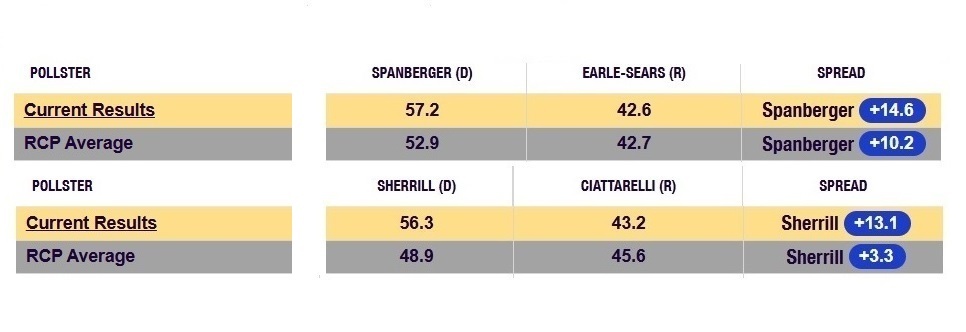
The polls sure were wrong -- but not the way we wanted them to be.
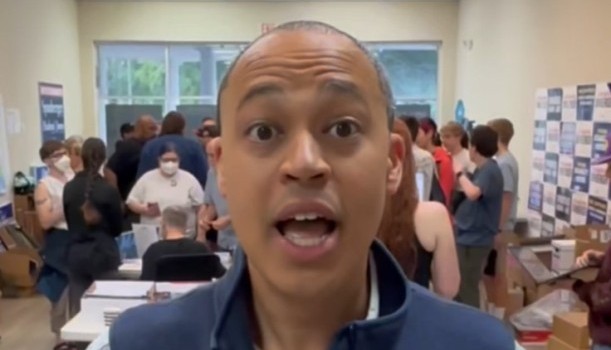
Possibly thinking: "Wow, the voters agreed with me! Republicans (and their children) DO deserve to die!"
Regarding the Republicans' gubernatorial defeats: it's one thing to be expected to lose, it's another thing to be completely obliterated and to have the calamity permeate the entire election ballot to the point where Republicans also hemorrhaged seats in the Virginia House of Delegates and the state Assembly in New Jersey.
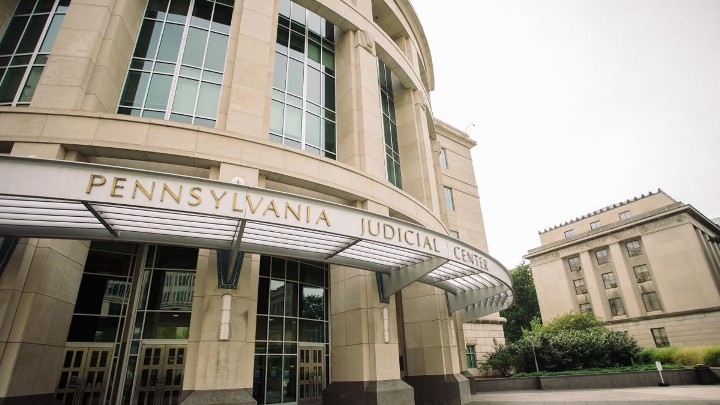
In 2025, Democrats cemented their control of the PA Supreme Court for years to come.
Pennsylvania voters had the opportunity to send those judges packing. Instead, all three judges who were up for retention were overwhelmingly returned (by nearly 25-point margins) to the court for another 10-year term. The PA Democrat Supreme Court thus maintains its 5-2 majority, and one of the two Republicans on the court barely qualifies as such; there is only one true Republican out of seven judges on the PA Court.
"Unimportant". . . "Not a big deal": Virginia, like some other solid "blue" states, is considering congressional re-redistricting. Virginia Democrats, soon to be in complete control of state government, would like to imitate California and disenfranchise Republicans via extreme gerrymandering. The results from last Tuesday surely embolden those Democrats. A small minority of New York City voters just elected a radical alien socialist as mayor. Tell the good people of California, Virginia and New York City that these results are "not a big deal". But the tiny, fragile twig that GOP pundits are seriously attempting to hang their hats on is this one: These results mean nothing for the future because "things change", "twelve months is an eternity in politics", blah blah blah. Platitudes, wishful thinking and other drivel are a poor substitute for actual analysis. On this website, we look at data rather than "feels". With the results from 2025 being so uncannily similar to the ones from 2017, it would be idiotic not to examine the results from 2018 and see how they might be pertinent to the upcoming 2026 midterms even if those midterms are "an eternity" away at this moment. The similarity of 2017 to 2025 is parallel to the relationship between 2016 and 2024. In 2016 Donald Trump won the presidency with 304 electoral votes and took 30 states. He won 45.9% of the popular vote. In 2024 Trump won the presidency again, this time with 312 electoral votes and 31 states (adding Nevada). He received 49.7% of the popular vote, the improvement coming not at the expense of his Democrat opponent but from the deterioration of third-party candidates, whose vote share was 4% less in 2024 than it had been in 2016. Kamala Harris actually took a greater percentage of the popular vote (48.2%) than Hillary Clinton had (48.0%). The parallel doesn't quite carry over to the House, where Republicans were in much better shape after 2016 than they are after 2024 (a net loss of 21 seats). But that's mainly because of what happened in 2018 -- which is the whole point here -- with the GOP losing many seats. Those losses were only partially offset in 2020 and 2022. After 2016 Republicans controlled the Senate by 52-48. After 2024 they now have a 53-47 advantage. That's pretty similar. Having compared 2024 to 2016, let's now shift one year and consider 2025 vs. 2017. Because 2021 was a significant factor in the false optimism which accompanied future elections in New Jersey and Virginia, we will show data for that year as well. 2017:
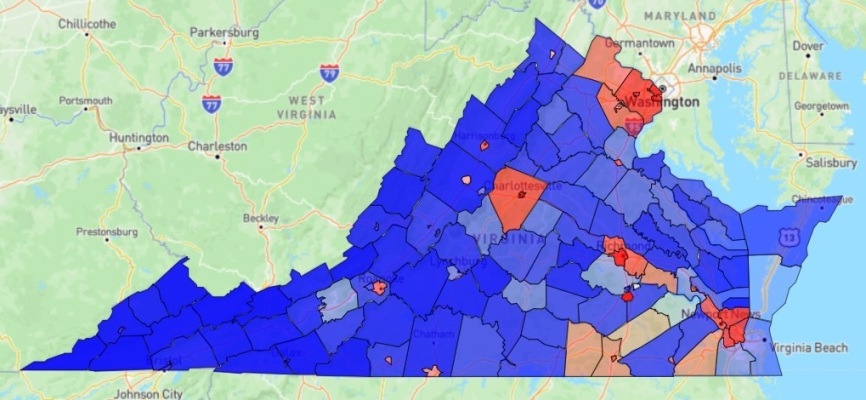
Happier days: 2021 gubernatorial election results in Virginia 2021:
Adding to the false hope in NJ was Trump losing by "only" 5.9% in 2024 and Curtis Bashaw losing by only 9.7% for the Senate. Also there was a voter registration shift to the right, a net change of 100K between 2022 and 2024, but the Rats were still up 900K (13.5%). In 2025 things improved, with the GOP being down 855K and 12.9%. Whoopee. As far as the 2025 elections in New Jersey were concerned, that wasn't false hope -- that was no hope. Turnout helped Republicans overcome some of their disadvantages in NJ in 2021 (registration deficit and state-level gerrymander) but things would return to normal in 2025 despite the indications from some occasionally cheery -- but sadly inaccurate -- pre-election polls. In Virginia there was an actual basis for hope after 2021 -- for a little while. There are no partisan voter registration stats to go by, however the election results were so encouraging that Republicans were expecting further gains in 2023 and 2024. In 2023 they failed to pick up the one state Senate seat they needed to get to 20-20 (GOP Lt. Governor would break the tie), and they lost 3 seats in the state House of Delegates, which was the exact number required to lose the House, giving Democrats full control of the state legislature and derailing any agenda GOP Governor Glenn Youngkin may have had. In 2024 Trump reduced his deficit from 10.1% to 5.7%, but his margin of defeat (260,000 votes) was still the second-worst of any GOP candidate in Virginia history, second only to Trump in 2020. Even in percentage terms it was the worst (aside from 2020) of any GOP nominee since Goldwater in '64. False hope extended to the 2024 senatorial campaign of Republican Hung Cao, whose 2022 showing as a House candidate in CD-10 was considered to be impressive. He lost by merely 6.5% that year in a district which was designed to give the Democrat a 10-12 point win. Whoopee again. Many delusionals thought that Cao could keep it close against Timmy Kaine in 2024, but few polls ever had him within single digits. Cao "overachieved" again. He only lost by 9 points. There was no false hope regarding GOP chances in Virginia in 2025; there was no hope at all aside from perhaps the Attorney General race. Polls showed a tossup but it turned out that a majority of Virginia voters agreed with the Democrat candidate on the pertinent topic of slaughtering Republicans and their children. 2025:
Republicans can be thankful for the lack of state Senate contests in NJ and VA in November, 2025; they couldn't lose more seats there if there weren't any elections. 2025 New Jersey gubernatorial results by region:
The above results for the 2025 Governor election are of course still unofficial (data as of 11/10) but are at least 95% complete in most counties. We defined the regions of New Jersey here: November 2025 Gubernatorial Elections -- New Jersey & Virginia. The Republican percentage of the vote collapsed to pre-2021 levels in all regions, even if not quite (in some areas) as bad as the GOP percentages from 2017 . Only in the Central Coast area did Jack Ciattarelli compare favorably at all to his results from 2021. In every other region of the state he finished well behind not only his surprisingly competitive 2021 performance but also behind Trump's mediocre showing in 2024. GOP results in the critical (and supposedly right-trending) northern part of New Jersey were especially disappointing. South Jersey was also a disaster for Ciattarelli. He had come barely one point away from winning that region in 2021 but lost it by a whopping 15 points last week. As we predicted, turnout in the ghetto areas of New Jersey returned to normal from the 2021 dropoff. That certainly wasn't good news for the Republican, but his problems were hardly confined to the worst areas of the state. Also, slightly-improving voter registration figures apparently aren't a guarantee of electoral success -- especially when those voters decline to participate. 
Artist's conception of the GOP's 2018 election results
Back to 2018:
An ongoing story throughout 2018 was the number of Republican incumbents in the House of Representatives who suddenly decided that they would not seek re-election in November. There were 23 Republicans who declined to run again for any office, and 11 other House Republicans who chose to run for a different office. Many of these 34, such as former House Speaker Paul Ryan, were anti-Trump moderates or liberals in marginal districts who were content with the prospect of potentially being replaced by Democrats. When trying to explain the debacle which resulted that November, with the GOP losing 40 House seats, the voluntary exodus was a convenient excuse albeit a false or at least incomplete one. Of the 34 Republicans who walked away in 2018, only 10 of them were replaced by Democrats. That's a considerable number, but a far cry from 40. The far bigger reason for the Republican party demise was the 30 incumbents who ran for re-election and lost. Seven of the total of 40 GOP losses occurred in California, which had just legalized a new form of Democrat electoral chicanery known as "ballot harvesting". That tactic allows ballots to be collected and counted for weeks after election day. Of the 7 Republican seats which evaporated in CA, at least 5 of them required "extra time" for the Democrat to eventually prevail. In 2018 the Real Clear Politics generic congressional polling final averages were GOP 44.9%, Democrat 53.3%. That polling could hardly have been more accurate -- after all the ballots were finally counted, the House vote share was GOP 44.8% (was 49.1% in 2016), Democrat 53.4% (was 48.0% in 2016). In case you're wondering about 2026 at this point, the current RCP congressional polling averages are GOP 42.0%, Democrats 46.1%. There are still lots of undecideds 12 months out from the election, but that 42.0% mark is abysmal. The whistlers past the graveyard now have another data point to ignore if they intend to remain adamant that 2026 can't possibly be as bad as 2018 was. 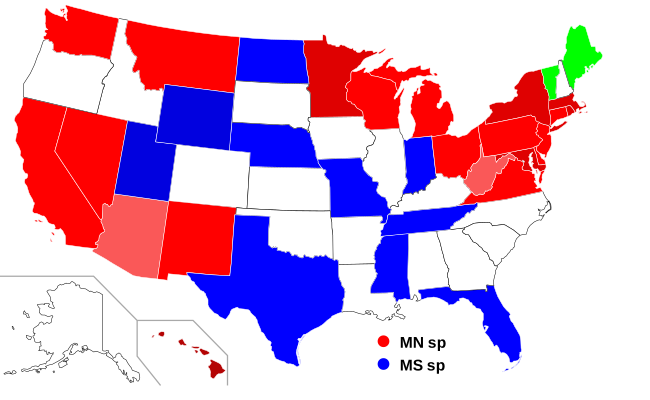
Senate results from 2018
The House went up in flames but Election Night 2018 was a good one for Republicans in the Senate. Good, but not great. The 2017 GOP defeat in Alabama had left the Republicans with a narrow 51-49 majority. In 2018 they picked up 4 Senate seats (FL, IN, MO, ND) but also lost a pair of seats which they had previously held (AZ, NV) for a net +2. For a little while there also seemed a possibility of the GOP losing Thad Cochran's seat in Mississippi.
Here, at last, is how the playing field stands as we head into 2026: Before we look at the prospects for the House in 2026, let's quantify what happened in 2018. In 2018 there were 80 districts (out of 435) across the nation which we would classify as marginal -- being in the range of D+5 to R+5. Those 80 are worth examining because they were the districts most likely to change hands. During any kind of "wave" election, as we saw in 2018, obviously more of them will change hands. Districts which are outside the marginal range are normally considered safe unless there is a wave of unusual intensity or there are other circumstances which make an incumbent vulnerable despite the lean of his district. Some facts about those 80 marginal districts in 2018:
Additionally, Republicans lost 8 House seats which were not in the marginal range and were assumed to be at least moderately safe. Six of those 8 districts saw GOP incumbents bite the dust; only 2 were open seats (one more dagger in the feeble "we lawst just coz of all the re-tyre-mints!" argument). The above data illustrates the impact of the 2018 "blue" wave in the House. Even though the 80 marginal districts tilted slightly to the right on average, Republicans still managed to lose 61 of the 80. And on top of that the 8 others which were supposed to be safe-ish. That's what a massacre looks like, so you'll recognize it if you see one again in 2026. As noted, the "marginal playing field" was tilted towards the Republicans in 2018. If the parties had won every tossup district in which they were favored and then split the 10 even districts, Republicans won have won 53 out of those 80 districts instead of just 19 of 80, a difference of 34 seats. Give the GOP 34 more House seats in 2018 (they would've had control, 234-201) and suddenly the second half of Trump's first term looks a lot different. We have looked at all House districts for 2026, factoring in new maps in Texas, Missouri, Ohio, North Carolina and California and we are assuming they are not overturned in court prior to ever being used. Try to look surprised when the partisan Democrat gerrymander in California passes judicial muster but Republican maps elsewhere do not. A new Democrat gerrymander was just approved on November 11 by a liberal judge in heavily-Republican Utah, which creates two more marginal districts (not being counted here yet) and very well could cause two Republicans to lose in 2026. In Utah. Pending upcoming Democrat gerrymanders which are still on the drawing board in states like Virginia, Maryland, Illinois and Colorado, and pending the much-anticipated Supreme Court ruling which may remove the requirement for certain states to create anti-White districts, here is how the House battleground is taking shape for 2026: There are currently 91 House districts which fall into the D+5 to R+5 range according to our ratings. We count 41 of those districts as having GOP incumbents and 41 with Democrat incumbents. The remaining 9 districts have no incumbent running, and that number will increase over the next few months. Including currently open seats, Republicans must defend 45 districts and Democrats 46. That's about as even a breakdown as can be.
The likely effects of the ongoing redistricting currently are:
We will cover the Senate prospects for 2026 in a commentary which will shortly follow this one. Conclusion: With even more re-redistricting to come, forecasting the outcome of the 2026 U.S. House elections from this far out is just a guessing game. Democrat-controlled states including (but not limited to) Virginia, Maryland, Illinois, Colorado and New York are lining up to disenfranchise Republicans further whether the law permits them to do so at this time or not. Maryland has only one GOP congressman left to be exterminated, but those other states can do much more damage. As we've mentioned, even rock-solid Republican Utah is being forced by a liberal black-robed tyrant to hand over 1 or perhaps even 2 House seats to Democrats (Utah only has 4 altogether). Some Republican states, perhaps including Florida, Kansas, Nebraska and Indiana can do unto Democrats as Democrats in other states will be doing unto Republicans. But deep-"red" Indiana has already chickened out, Kansas (like Indiana and Missouri) could gain only 1 seat at most -- they all count, so don't scoff too much -- and the GOP can't gain any in Nebraska but can save one which otherwise is about to go down the toilet. Only in Florida is there the potential for a Republican state to get some "California-style" revenge on Democrats, but they could overextend themselves and wind up worse off than where they started (as could easily occur in North Carolina). The Supreme Court may come to the rescue. Do not hold your breath waiting for that. A case is pending, brought by a group of White voters in Louisiana who are challenging the racist congressional district map which was demanded by a judge and then used for the 2024 House elections. These disenfranchised voters are suing in an attempt to strike down a map which created a second black-majority district in their state. If the USSC rules in favor of the plaintiffs, professional racists are concerned that all racist Democrat gerrymandering everywhere -- which has been "the law" since at least the early 1990s -- will collapse, thereby eliminating several districts ("19" is the magic number they keep quoting) which are currently held by black Democrats, and those Democrats will all be replaced by White Republicans. As a result, the GOP would firm up its control of the House such that no amount of Democrat gerrymanders in California, Virginia, New York, Illinois or wherever can offset. This is utter nonsense. First the case has to actually be decided and the Supreme Court is in no hurry, especially in an election year; it will surely be 2026 before anything happens. Secondly, the court has to decide the right way. Does anyone really expect there to be 5 votes for doing the right thing here? John Roberts can almost certainly be relied upon to do the wrong thing. Again. Then there has to be sufficient time to draw new maps in the affected states. And sufficient time for the immediate Democrat lawsuits to be heard. And then those suits must be rejected so the new maps can be implemented. Good luck with all that. And then things have to work out the way panicky Democrats fear they will. Let's take a look at how the Democrat crystal ball came up with this cockamamie number of "19" seats which they claim are in jeopardy if the USSC disallows racist (i.e. Democrat) gerrymandering in certain southern states. Remember: this stuff was never about race; it was always about partisan politics. Whenever you see the word "black" or "minority" in some racist court ruling, replace that word with "Democrat" if you want to know the truth. As best we can guess from trying to interpret the feverish nightmares of Democrats, here are the Magic 19:
So there you have it: 19 House seats which are currently held by black Democrats. If the recently created maps in MO and NC hold up in court, then the GOP will be +2. If the Supreme Court does the right thing and does it promptly, there is a good chance for Republicans to reclaim the two seats (AL-2, LA-6) which black-robed leftist dictators stole from them in 2024. There will be no further developments in Missouri or North Carolina. That leaves Florida and Georgia as the only hopes for inflicting some damage on the Rats. That's much easier said than done. No matter what lies Democrats are telling about this upcoming court ruling, Republicans will never get anywhere near +19. Doing so would require them to eliminate most or all of the above districts and then create ones which will elect a Republican. And then have those district maps persist despite Democrat lawsuits. That's completely impossible, and Democrats know it. But they never fail to play the race card or the victim card whenever they can, the media swallows that shit up and then regurgitates it for the purpose of bamboozling low-info, low-intelligence voters into voting (D). The fluctuating re-redistricting landscape is making 2026 a unique year for which to forecast House elections, and that will be true until all maps are final. Even ignoring that factor for the moment, there is already substantial evidence to conclude that the 2026 results will mirror the results from 2018; conversely, at this time there is zero evidence (wishful thinking is not "evidence") that the 2026 results will not mimic 2018, at least as far as the general direction those results will take. To what degree that will happen is something that can't be anticipated with any precision yet. It's very possible that Congress in 2027-28 will look very much like the one from 2019-20, with Democrats -- no matter how slender their majority -- marching in lockstep in full control of the House ("Peach Mints are back on the menu immediately!") while disunited Republicans perhaps cling to nominal Senate control with a lame duck in the White House. Tags:
2025
2026 (uh oh)
Virginia
New Jersey
And just about everywhere else
| |||||||||||||||||||||||||||||||||||||||||||||||||||||||||||||||||||||||||||||||||||||||||||||||||||||||||||||||||||||||||||||||||||||||||||||||||||||||||||||||||||||||||||||||||||||||||||||||||||||||||||||||||||||||||||||||||||||||||||||||||||||||||||||||||||||||||||||||||||||||||||||||||||||||||||||||||||||||||||||||||||||||||||||||||||||||||||||||||||||||||||||||||||||||||||||||||||||||||||||||||||||||||||||||||||||||
| 10/24/2025: November 2025 Gubernatorial Elections -- New Jersey & Virginia [RightDataUSA] | |||||||||||||||||||||||||||||||||||||||||||||||||||||||||||||||||||||||||||||||||||||||||||||||||||||||||||||||||||||||||||||||||||||||||||||||||||||||||||||||||||||||||||||||||||||||||||||||||||||||||||||||||||||||||||||||||||||||||||||||||||||||||||||||||||||||||||||||||||||||||||||||||||||||||||||||||||||||||||||||||||||||||||||||||||||||||||||||||||||||||||||||||||||||||||||||||||||||||||||||||||||||||||||||||||||||
Although the elections may be tantalizingly close (in truth, they probably won't be that close), the likeliest outcome for the Republicans is. . .

The races have generally (but not consistently) been tightening in both states, especially according to polling organizations which are classified as Republican-leaning by liberal media sources. Some hardcore leftists (e.g. Washington Post) are cheerleading for a Democrat blowout in Virginia, but the ones who attempt to be less transparently liberal forecast the contests as being moderately competitive. Close though the races may be, as things stand now both Jack Ciattarelli (NJ) and Winsome Earle-Sears (VA) appear to be heading for losses. It's up to the good voters of New Jersey and Virginia to get out and vote and prove the pollsters wrong.
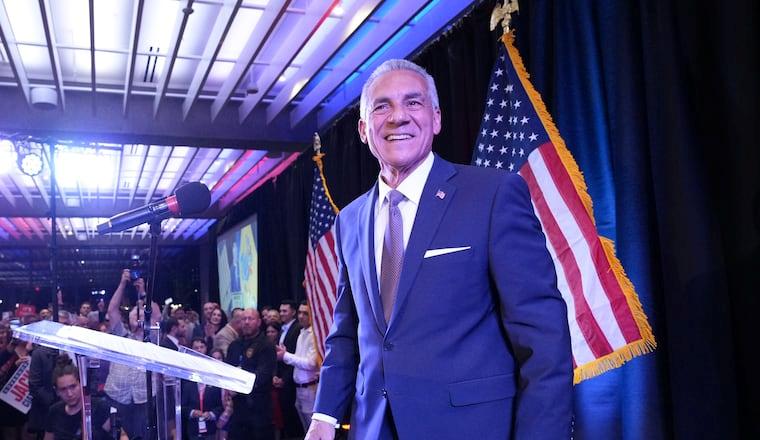
Photo credit: inquirer.com
Background:
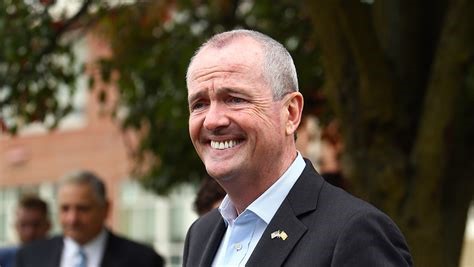
Photo credit: app.com
The 2021 election was mainly a referendum on Murphy's first term, with Ciatterelli being regarded as sufficiently bland and moderate to avoid alienating potential crossover Democrat voters which any Jersey Republican requires in order to have a chance of winning a statewide election. Murphy is a huge supporter of the illegal importation of new Democrat voters from foreign countries, and he designated New Jersey as a sanctuary state. He also took several steps to hinder the deportation of illegals, such as not permitting law enforcement to ask about immigration status. By 2021 many New Jersey voters had grown weary of the invasion and their disaffection hurt Murphy's re-election chances. Nor were the voters pleased with the numerous tax increases which were passed by the overwhelmingly Democrat NJ legislature.
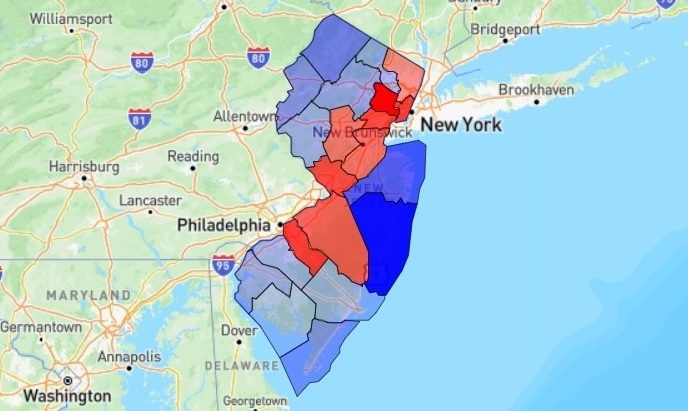
2024 presidential election results in New Jersey
Geography:
West Jersey and the Central Coast are the most Republican areas of the state; together they normally cast 28-30% of the statewide vote. Unsurprisingly, Ghetto Jersey is by far the most Democrat area of the state; it delivers about 18% of the statewide vote and gives a tremendous margin to whatever Rat is running. Of the three recent elections (2017 Governor, 2021 Governor, 2024 President) which we will be focusing on for the purpose of establishing trends, Trump did the best of any GOP candidate in this region, but still received only 32% of the vote. Central Jersey (epitomized by places such as Trenton, New Brunswick and Princeton) is consistent in its anti-Republicanism and provides approximately a 16-point margin for the Democrat while accounting for 16-17% of the statewide vote. South Jersey is the largest region both in land area and in number of votes. It accounts for about 22% of New Jersey's votes and can be marginal. It was heavily against Ciatarelli in 2017 but he nearly won there in 2021 before the region swung back a few points to the left against Trump in 2024. The Urbanized North is the most marginal region now and is the one which is moving most noticeably to the right although still slightly favoring the left. It is this area which GOP analysts see as the key if they are to win in New Jersey. Republicans have recently been competitive in the 9th congressional district which lies almost entirely in this region, despite being grossly outspent and despite a Democrat gerrymander which deliberately omits the better parts of Passaic County. Ciattarelli improved here by 12 points (net) between 2017 and 2021 and Donald Trump nearly won this region, losing by only 1.5% in 2024.
The next table shows the margin of victory (or defeat, if the number is negative) by region for the GOP candidate in these three elections:
Finally, the number of votes cast by region, along with the region's percentage of the statewide vote:
One of the keys to the near-upset in the 2021 gubernatorial election was the fact that many ghetto voters (Democrats, obviously) chose to sit that one out rather than vote for Murphy. The share of the statewide vote from Essex, Hudson and Union counties dropped nearly 2 percent. Those voters were re-energized in 2024 to vote against Trump and the statewide vote share from the 3 ghetto counties rebounded to where it had been in 2017. Anti-Murphy apathy will not be on the ballot in a couple of weeks, but anti-Trump motivation will be -- here and everywhere else where an election is taking place (at least in "blue" areas). As was the case in the disastrous election years of 2017-18, Trump is always "on the ballot" as far as the left is concerned. Turnout in these off-year races isn't quite as meager as it is for little-publicized special elections which often take place at odd times (i.e. not November), but turnout still does not approach presidential-year levels. That means motivation, organization and money are the key factors to generating turnout; Democrats are normally substantially ahead in all 3 of those factors, and it shows. Voter Registration: 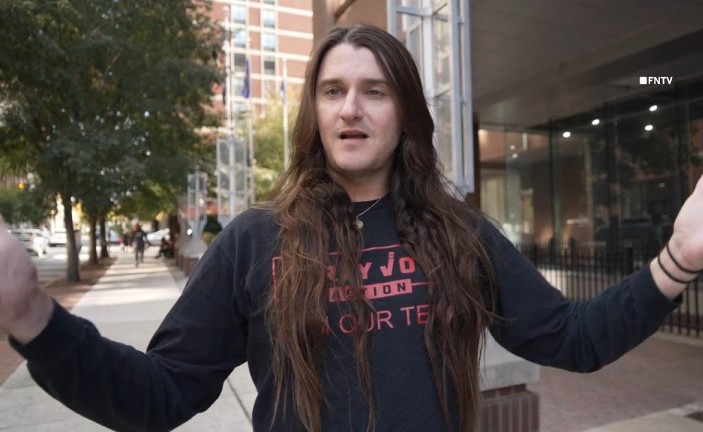
Photo credit: redlineheadlines.com
Scott Presler and his organization have worked diligently over the past couple of years to increase Republican voter registration counts in certain states. Presler focused on Pennsylvania during 2024 and has been given inordinate credit for the GOP victories which occurred there -- Trump's win along with that of Senator Dave McCormick, and the important pickup of two House seats (CD-7 and CD-8) in Eastern PA.
2025:
The last time Republicans achieved a 40.9% or greater share of voter registrations in a November election in PA was 2003. This November, Pennsylvania voters will have the chance to oust 3 Democrat members of the state Supreme Court. Those members, along with their liberal colleagues, are responsible for the hyper-partisan gerrymander which has affected not only congressional districts in Pennsylvania but state legislative districts as well. These gerrymanders cost Republicans 4 U.S. House seats (and almost 2 others) from 2019-2024 and cost 12 state House seats -- exactly enough to give Democrats control. Republicans have a chance to eliminate some of the justices who caused those events to happen, and perhaps gain a majority on the PA Supreme Court in the process. 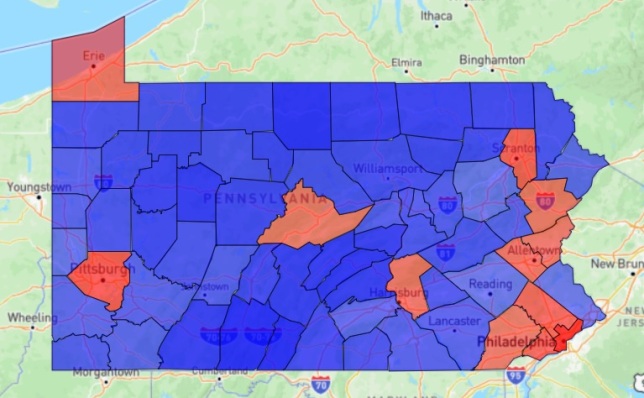
2024 PA voter registration, by county
After 2024, Presler and his vote registrars moved east to New Jersey in an attempt to turn that state "red". As in PA, trends in New Jersey were already favoring Republicans, although these trends have not manifested themselves in any victories. Trump's loss by 5.9% here in 2024 was actually the best showing for a Republican candidate since George Bush lost by only 2.4% in the 3-way election of 1992. Prior to 1992, the GOP won 6 presidential elections in a row in New Jersey before the state's demographics began to head rapidly south.
November 2024:
October 2025:
It is worth noting that a sizable number of New Jersey voters are neither Republicans nor Democrats. If the polls are correct, independents are favoring the Democrat by a substantial amount in the 2025 gubernatorial race. Going back to 2008, Republicans have added 614,894 voters in New Jersey and Democrats have added 742,790. However the recent data is more affirmative with the GOP registering large gains during 2024 and then almost as many again in 2025. Democrat registration has been stagnant during the past two years. Will the "Presler bump" in 2025 be enough to put Ciattarelli over the top on November 4? Current polling suggests it will not. He may be fortunate to lose by only as much as he did in 2021. Conclusion: It is being reported, even by far-left sources, that all is not well in Camp Sherrill despite her clear lead in nearly every poll. There has also been fear that black voters and other minorities will turn out at less than their usual rate, as occurred in 2021 (spoiler alert: that isn't going to happen again in 2025). The Naval Academy cheating scandal in which both Sherrill and her husband are allegedly involved isn't resonating at all with voters and (shockingly!) isn't being covered in the so-called mainstream media. Even lefties concede that Sherrill does not generate much enthusiasm, but the fact that New Jersey has nearly 1 million more Democrats than Republicans makes "enthusiasm" a rather moot point in the face of that landslide registration advantage. Furthermore, while comparatively few Democrat and independent voters may be excited about voting for Mikie Sherrill, they are probably quite motivated to vote against Donald Trump clone Jack Ciattarelli. Of course Ciattarelli is no such thing, but hatred is a powerful motivator for Democrats and no facts are going to be allowed to impede that hatred. Final prediction: Sherrill prevails by 2 to 4 points, with a decent potential for an even greater margin (say, 4-6 points). We'd positively adore being wrong about this outcome, but even if she only wins by 1 then we're still not quite wrong enough. Virginia: 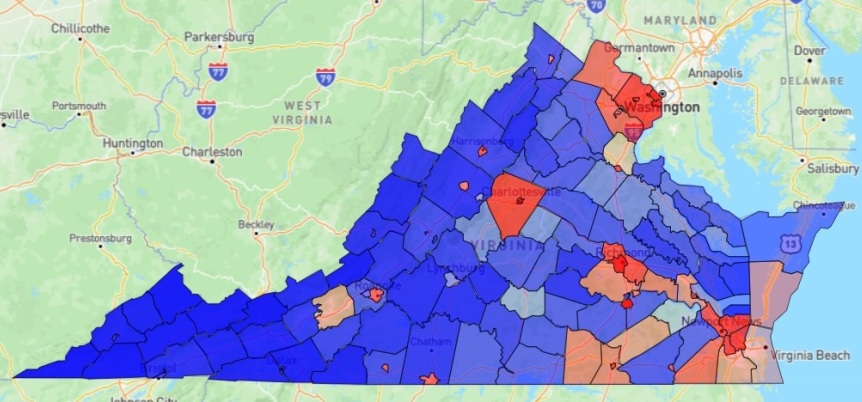
2024 presidential election result in Virginia
Background:
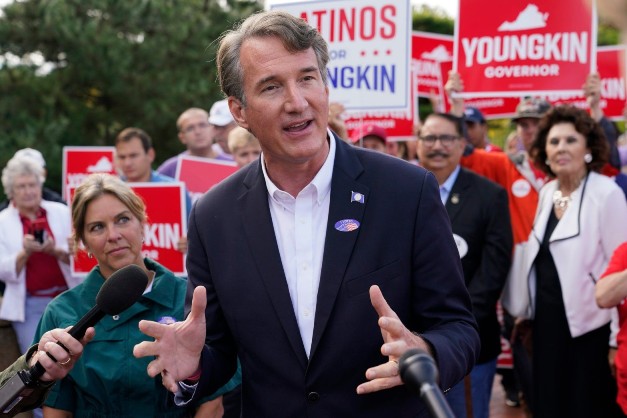
Photo credit: washingtonmonthly.com
The candidates: 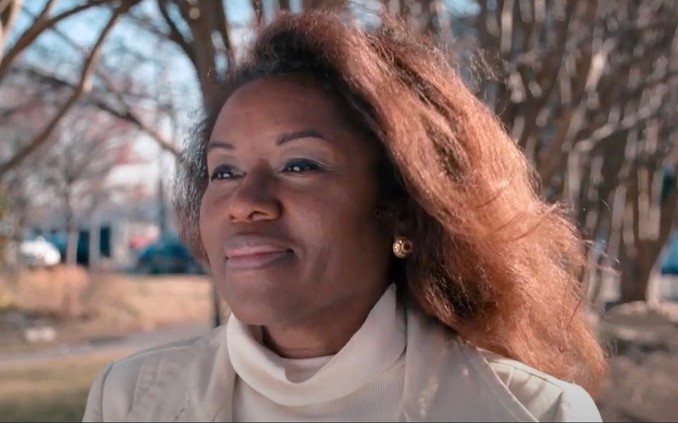
Photo credit: lifenews.com
GOP nominee Winsome Earle-Sears is an immigrant from Jamaica who arrived in the U.S. at the age of 6. She served in the United States Marine Corps for 4 years in the 1980's and became an American citizen during that time. Her political career commenced in the early 2000's when she won a race for the state House, upsetting a black Democrat who had been in office for two decades. She was the first Republican to win a state House seat in a majority-black district in Virginia since 1865. She later became the state's first female Lieutenant Governor (elected in 2021) and is the first black female to be elected to any statewide office in Virginia.
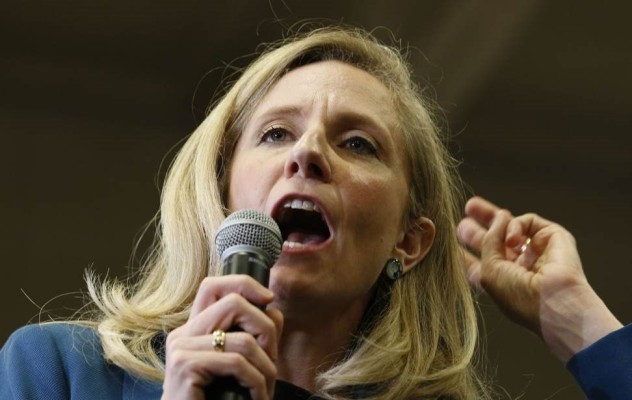
Photo credit: twitchy.com
Spanberger, a native of New Jersey, went from being a substitute schoolteacher and a postal inspector to (as of 2006) being a spy for the Central Intelligence Agency; a rather interesting career change, to say the least. When she first entered politics, Spanberger's CIA resume was sanitized so that it could be declassified and, according to ABC News, the former spook stuck "to carefully scripted lines, approved by the agency, when talking about her work" on the campaign trail.

Photo credit: NRCC
Republicans picked up 13 House seats in 2020 but Spanberger's wasn't one of them although a serious effort was made. Her district, which had been rated as R+10 prior to the 2016 Democrat gerrymander, was still slightly "red" and Republicans had it high on their list of potential pickups. Spanberger, then as now, occasionally talks like a moderate and did cast a highly publicized (and highly choreographed) vote against Nancy Pelosi for Speaker in January, 2019. Spanberger then spent the remainder of her first term in Congress establishing her liberal bona fides, but was able to conceal that fact from the voters as she reverted back to her faux-moderate persona.
Taking some of these regions together, Virginia can be divided into three pieces of approximately equal electoral weight. Two of the three nearly always favor Democrats. NOVA is of course the most Democrat-infested area, teeming with people whose livelihoods depend on the federal The portion of the state which is included in the Piedmont / Southside / Shenandoah / SW Virginia regions accounts for just under 30% of the statewide vote and gives Republicans their biggest margins of any region. The statistically insignificant (barely 2% of the vote), lightly populated Chesapeake Bay counties also support Republicans lately, by almost exactly the same percentages as obtained in the Piedmont / Southside areas. The Greater Richmond and Hampton Roads regions together outnumber NOVA in total voters, though not by a lot. They solidly favor Democrats in most races, and if a Republican is going to win a statewide election he needs to come close to getting 50% here. Youngkin did that in 2021 (he received about 48%) but Ed Gillespie didn't in 2017 nor did Donald Trump or Hung Cao in 2024. The latter 3 GOP candidates mustered only about 42% or 43% there; Youngkin won statewide, the others did not. Conclusion: Unlike in North Carolina in 2024, where the unpopularity of one GOP candidate (Mark Robinson) dragged down the entire statewide Republican ticket although some Republicans won anyway, the presence of violent, feral racist Jay Jones as Democrat nominee for Attorney General has had no impact on other Virginia Democrats in 2025; in fact, Jones still retains about a 50-50 chance of winning himself according to left-wing pollsters. So any Jones Effect on the gubernatorial race which would assist Sears can likely be discounted as non-existent. As of October 15, campaign finance reports showed that CIAbby had raked in $53.8 million and disbursed $48.4 million. The Sears campaign lags far behind, running on about half of what the Democrat has done in both of those categories. There is also a wide disparity between the two candidates in terms of remaining cash-on-hand, with about a 3:1 advantage to Spanberger as we head into the final days of the campaign. The Lieutenant Governor race and the one for Attorney General will end up closer than the Sears-Spanberger duel, but Republicans are likely to lose at least one of those two downballot tilts, and quite possibly both. There is some chance that they could win both (while still losing for Governor), but that is less likely barring a significant change in fortunes between now and November 4. The Virginia state Senate has been in Rat hands since they picked up the two seats they needed in 2019. It's been status quo since then, with the Republicans needing one seat to forge a tie and two to take control. With the L.G. probably going Democrat in 2025, one seat isn't going to be enough. The state Senate map for this decade has been gerrymandered to favor Democrats, and under those conditions the GOP is doing well to merely be down 21-19. A similarly gerrymandered state House map also strongly favors Democrats; again, the GOP has done well to even keep it close. The forecast for this November is not sunny for Virginia Republicans at the state legislative level, and they are going to need to overachieve a little more if there is any hope of thwarting the agenda of "Governor Spanberger". Ugh. Tags:
2025
Governor
New Jersey
Virginia
| |||||||||||||||||||||||||||||||||||||||||||||||||||||||||||||||||||||||||||||||||||||||||||||||||||||||||||||||||||||||||||||||||||||||||||||||||||||||||||||||||||||||||||||||||||||||||||||||||||||||||||||||||||||||||||||||||||||||||||||||||||||||||||||||||||||||||||||||||||||||||||||||||||||||||||||||||||||||||||||||||||||||||||||||||||||||||||||||||||||||||||||||||||||||||||||||||||||||||||||||||||||||||||||||||||||||
| 7/2/2024: Virginia: Not "Good" At All; New York: Fire (Chief) Has Been Extinguished; Colorado: Democrat Manipulators Invade GOP Primaries Again [RightDataUSA] | |||||||||||||||||||||||||||||||||||||||||||||||||||||||||||||||||||||||||||||||||||||||||||||||||||||||||||||||||||||||||||||||||||||||||||||||||||||||||||||||||||||||||||||||||||||||||||||||||||||||||||||||||||||||||||||||||||||||||||||||||||||||||||||||||||||||||||||||||||||||||||||||||||||||||||||||||||||||||||||||||||||||||||||||||||||||||||||||||||||||||||||||||||||||||||||||||||||||||||||||||||||||||||||||||||||||
In Virginia the results were literally "not Good", as staunch conservative Bob Good (100% lifetime ACU rating through 2023) was narrowly defeated in the CD-5 GOP primary by state Sen. John McGuire, who also purports to be a conservative. Bob Good (not to be confused with former congressman and presidential candidate Virgil Goode, who represented this same district from 1997-2008) was first elected in 2020 when he beat incumbent moderate Denver Riggleman -- who later bolted from the GOP -- at the party convention and then prevailed over black liberal Democrat Cameron Webb in the general. The national Democrat party saw to it that Webb had nearly $6 million to spend (vs. Good's barely $1 million) and dumped even more into the pot via an additional $4.6 million in "independent" expenditures against the Republican. Good fit the district reasonably well and had no trouble being re-elected in 2022.
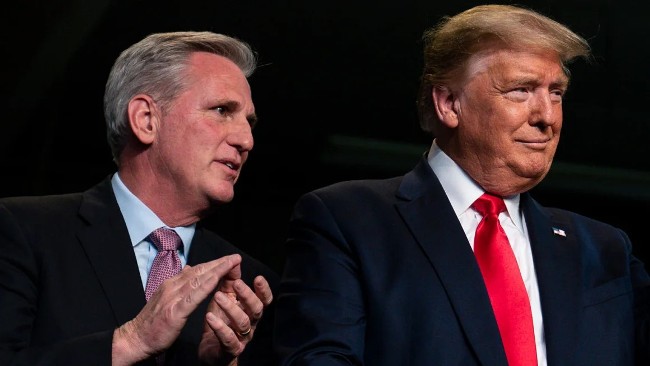
Photo credit: Evan Vucci/AP
Walking hand-in-hand with liberal GOPeers such as Kevin McCarthy this time around was a guy by the name of Donald Trump, who declared war on Bob Good because the 100% conservative congressman had violated Trump's First Commandment: "Thou shalt have no other gods before Me". Good, you see, endorsed Ron DeSantis for president over a year ago but then switched back to Trump and even went so far as to show up in person in New York City to support Trump during the former president's political persecution trial in Juan Merchan's Kangaroo courtroom.
Hillary Rodham Clinton, among her numerous repulsive traits, is petty, vengeful and unforgiving -- or worse -- to those who cross her; Vince Foster, Ron Brown and Jim McDougal were unavailable for comment on that subject. Bill had nothing to say either. Although the Clintons do possess an "enemies list", Hillary never acted upon that list -- at least not in any way which would deprive her congressional enemies of their jobs. She did not wreak vengeance on the ultra-liberal members of her party who endorsed Barack Hussein Obama over her in 2008, nor on those who endorsed Bernie Sanders against her in 2016. That's not because Hillary has any kind of warm and forgiving side, it's because only the Stupid Party is stupid enough to deliberately sabotage those who represent its ideological and electoral base. Democrats, like Communists, always put the Party first; RINOs would rather see aggressively conservative Republicans like Bob Good defeated whenever possible. The RINOs got their wish in Virginia last month. While Trump had his own petty reason for attempting to terminate the career of this particular conservative, the rest of the GOPe had another reason. The squishes don't find themselves allied with Donald Trump very often (but still more often than we would like), but because Good had voted to topple RINO McCarthy as Speaker last year -- and because of Good's resolutely conservative record -- the GOPe were all-in against him alongside the former president. 
Photo credit: Steve Helber/AP
The backstabbing of Good was reminiscent of prior events in the Old Dominion, such as when conservative Dave Brat was abandoned by the GOPe and hung out to dry, allowing him to be outspent heavily and defeated by Abby "Deep State" Spanbarger in congressional district 7 in the anti-Trump wave election of 2018.
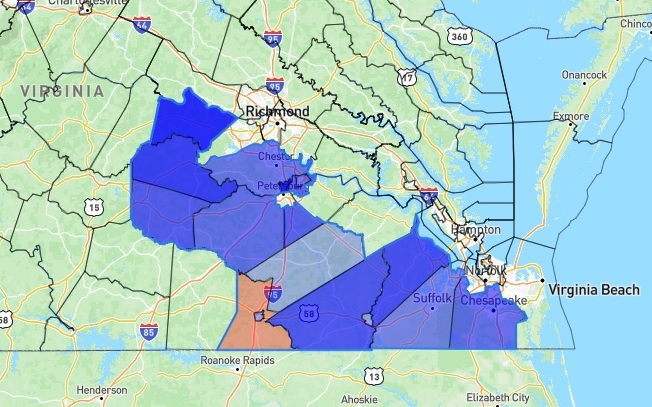
VA-4 results in 2014 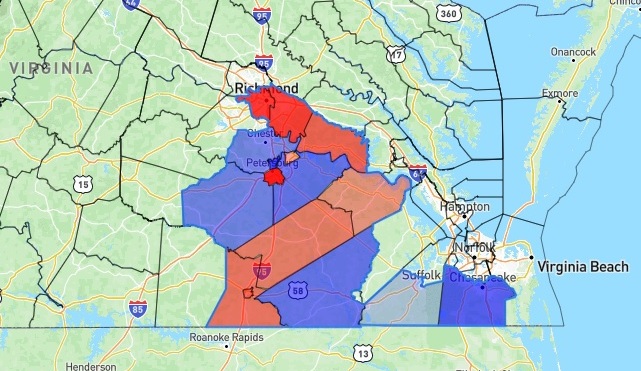
VA-4 results in 2016
The goal of the gerrymander was to obliterate the 4th district as previously drawn (see above maps), and cause it to expel a White Republican incumbent (Randy Forbes) and replace him with a black Democrat. This was easily accomplished. However a side effect was to significantly alter Brat's 7th district, much to his detriment, as you can see from the following maps.
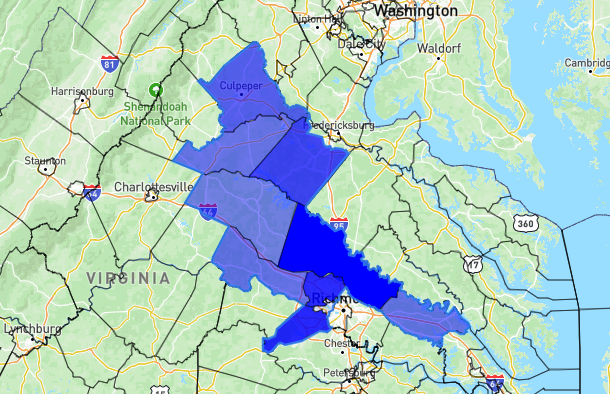
VA-7 results in 2014 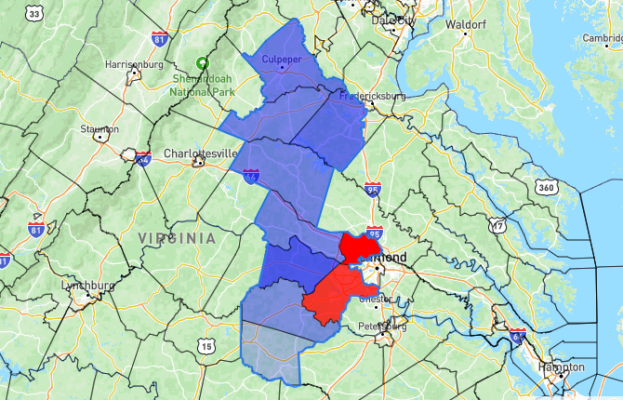
VA-7 results in 2018
Bad areas of Chesterfield and Henrico counties in the Richmond suburbs were added to VA-7, causing their proportion of the district vote to increase to around 60% from 50%. Brat still won in 2016 fairly easily, but with a margin (15 points) that was noticeably down from what it had been in 2014 (24 points). Prior to redistricting CD-7 was rated as R+10; after redistricting it was closer to R+2. Then came the 2018 election, the district flipped from blue to red (proper color usage) where it has remained, and Brat was finished. Democrats were happy; the GOPe was elated.
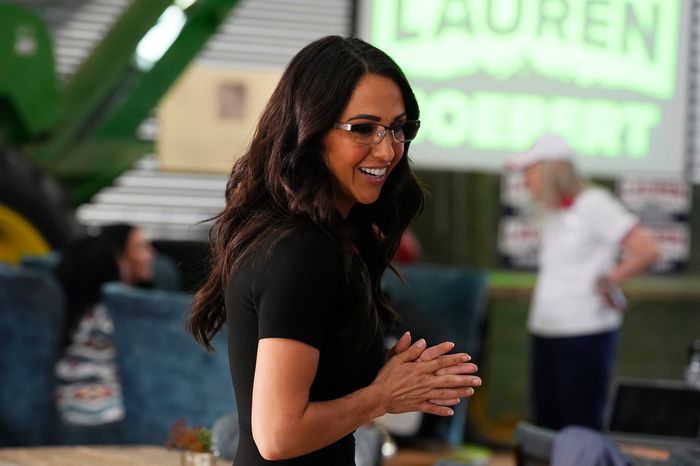
Photo credit: David Zalubowski /AP
In Colorado, Lauren Boebert took the first successful step in her bid for re-election in her new district (CD-4) as she easily defeated 5 other Republicans in the June 25th primary. Boebert, the current incumbent in CD-3, did not run in the special CD-4 election to replace Ken Buck, the formerly righteous conservative who ran shrieking to the left and exited a few months ago in order to hamstring the narrow GOP House majority even further than it already was.
Federal Election Commission reports concerning Colorado's 3rd district show that something called the "Rocky Mountain Values" PAC spent nearly $200K against conservative Ron Hanks, who was able to raise only $22,000 himself to fight back against the liberals -- Democrats and Republicans -- who supported his main primary opponent, moderate-liberal lawyer Jeffrey Hurd. The left-wing media claims that Rocky Mountain Values actually spent $500,000, and that the funds were spent supporting Hanks, because the PAC calculated that the conservative would be easier to beat in November. This Democrat PAC exists for the sole purpose of collecting and spending money to manipulate Republican primary outcomes in Colorado, one way or the other. He could have had an impact, but Donald Trump was silent in the CD-3 primary race and avoided endorsing the conservative; probably because that woefully-underfunded conservative was likely to lose the primary anyway. Which he did, by about 13 points in a 6-way race; current figures show Hurd as the winner with 41.3%, to 28.5% for Hanks. This is not the first time Democrats have openly tried to sabotage Republican primaries in Colorado. In numerous states in 2022, Democrats cleared the field for their chosen candidates in winnable statewide elections, thereby averting needlessly expensive and divisive primaries. That tactic also frees up Democrat voters who, because they have no real contests of their own to vote in, are able to cross over and manipulate the outcome of GOP primaries. Colorado state law even allows "independent" voters to participate in Republican primary elections without having to bother to re-register (no matter how temporarily) as Republicans. In 2022, only in the Pennsylvania Senate race (among all truly contested two-party races for Governor or Senate in the entire country) did Democrats allow the possibility of an acrimonious primary election. But it never happened because all of the party's heavyweights -- and their money -- were on the side of radical leftist candidate John Fetterman instead of the slightly less liberal candidate, Conor Lamb. Lambykins was never close in any primary poll, usually not even within 20-30 points of Fetterman, so there was never any doubt as to who the winner would be and the puppetmasters could afford to let the voters appear to "decide" that election. It's more of the same in 2024, where Democrats have once again cleared the field in every primary election where it matters, while Republicans still regularly wage war against each other in their primaries. On the GOP side the primary winner is often mortally wounded heading into the general election, and the RINOs refuse to unite with the conservatives whenever the primary voters have the temerity to select the less liberal candidate. In no state were liberal manipulations of GOP primaries more blatant than in Colorado in 2022. Democrats, often uniting with anti-conservative Republicans, spent inordinate amounts of money to get their way. In CD-3 in 2022, Democrats pulled out all the stops to either defeat or severely injure Lauren Boebert in her primary election against RINO Don Coram. They failed to defeat her at that time, but they were able to inflict sufficient damage which -- combined with the vast amount spent by liberal Aspen Democrat Adam Frisch, including over $2 million of his own money -- almost got the job done in November. Boebert narrowly escaped with a 50.1% to 49.9% win. Frisch spent over $6 million in all in 2022, which is chump change compared to what he and the Rats are spending in one more attempt to buy this congressional seat in 2024. Though failing in CD-3 in 2022, Democrats did get the outcomes they wanted in the more important Governor and Senate elections in Colorado, not to mention the really important Secretary of State election. Though it is not clear why they felt the need to go to so much trouble influencing Republican primaries for offices which the Democrats were always highly likely to win regardless of who the GOP nominee turned out to be. In the gubernatorial and senatorial Republican primary races, big-money Democrats funneled lots of $$$$ to the more conservative GOP candidates with the idea that they would be easier to defeat in a general election. The conservative who was running for Governor, Greg Lopez, was defeated in that primary by liberal Republican Heidi Ganahl, who was obliterated by almost 20 points by the incumbent Democrat rump-ranger in November. Lopez was elected to Congress last week in the special election in Colorado's 4th congressional district. His tenure in the House will be brief, as he did not choose to run for the full term which begins in 2025. In the 2022 GOP Senate primary, the puppetmasters feared squishy Republican Joe O'Dea and tried to boost Ron Hanks -- the same Ron Hanks who ran in the 2024 primary in CD-3. Once again the string-pullers failed to drag the conservative across the finish line, but they need not have feared O'Dea -- he lost by over two touchdowns in November to the incumbent liberal Democrat. But not before those same puppetmasters invested over $16 million dollars in "independent" expenditures against O'Dea; O'Dea himself was only able to raise $10 million altogether and $4 million of that came out of his own pocket. He never had a chance, though GOP leaders talked bravely (and stupidly) about supporting him with money -- however little that amount was, it would have been much better spent on Senate races practically anywhere else, like Georgia, Arizona or Pennsylvania. The biggest liberal coup of all in Colorado in 2022 was capturing the vital Secretary of State office, which is the office in charge of counting votes and abetting Democrat vote fraud (and helping persecute those who call it out). The GOP primary in that race was quite mysterious: How Did A Zuckerberg Charity Stooge Win A GOP Primary In Colorado? Subtitle: "Pam Anderson won a race with no money and very few visible voters". 
Photo credit: NY Post
On June 25, Jamaal "Fire Chief" Bowman (D-NY) was soundly defeated in the Democrat primary in New York's 16th congressional district by Westchester County executive George Latimer (D-Israel). Bowman thus becomes the first member of the radical leftist Democrat coven known as "The Squad" to be defeated in a re-election bid.
Fire Chief Bowman falsely claimed that he turned in the alarm because he was trying to open emergency doors so he could hustle to the important vote which was taking place elsewhere in the Capitol building -- a phony fire alarm is more dangerous than any alleged "crime" committed by the J6 political prisoners. Bowman was facing a six-month jail term for this stunt, but charges were quickly dropped by Washington D.C. authorities (go figure). The House Ethics Committee, which is led by GOP milquetoasts, also immediately declined to recommend any punishment for Bowman. New York's 16th district was rated by Charlie Cook as D+25 in 2020 and D+20 after redistricting reduced the Bronx portion of the district to practically nothing; CD-16 is now contained almost entirely (~95%) within suburban Westchester County and remains utterly safe for Democrats. The new Democrat congressman from CD-16 will be just as liberal as Bowman, so don't expect any improvement there; he probably won't be as obnoxious, though. 
Westchester County, NY
People who get their demographic information from television sitcom reruns may believe that Westchester County is a bastion of upscale White Republicans in a bucolic setting of well-manicured lawns and endless golf courses. To them, it must be confusing that such an area would have elected and then re-elected a black racist who is one of the most far-left Democrats in the entire House.
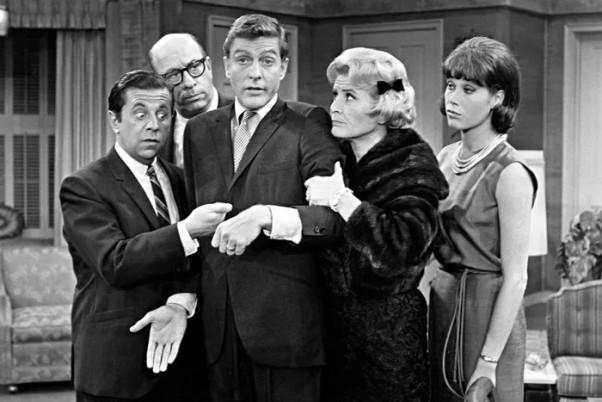
Photo credit: Bettmann Archive
In the early 1960's, Hollywood ultra-liberal Carl Reiner placed the main character's home in New Rochelle in "The Dick Van Dyke Show". A decade later, Hollywood ultra-liberal Norman Lear created a spinoff of "All in the Family" based around the strident liberal character of Maude Findlay. The show, called "Maude", was set in the village of Tuckahoe. 
Photo credit: YouTube
When Rob and Laura Petrie and their son Richie were living in Westchester County in their early 60's sitcom world, the county was over 90% White and gladly voted for Republicans -- albeit liberal Republicans. Westchester's influence in New York elections peaked in Maude's 1970's, at which time demographic deterioration was picking up speed as refugees from New York City invaded in larger numbers. This naturally caused many of the good people of the county to flee to more distant places such as the Hudson Valley, further Upstate, or Florida, the mass exodus serving to push Westchester further left.
Tags:
2024
U.S. House
Virginia
Colorado
New York
| |||||||||||||||||||||||||||||||||||||||||||||||||||||||||||||||||||||||||||||||||||||||||||||||||||||||||||||||||||||||||||||||||||||||||||||||||||||||||||||||||||||||||||||||||||||||||||||||||||||||||||||||||||||||||||||||||||||||||||||||||||||||||||||||||||||||||||||||||||||||||||||||||||||||||||||||||||||||||||||||||||||||||||||||||||||||||||||||||||||||||||||||||||||||||||||||||||||||||||||||||||||||||||||||||||||||
| 5/16/2024: Mid-May Primary Wrap-Up [RightDataUSA] | |||||||||||||||||||||||||||||||||||||||||||||||||||||||||||||||||||||||||||||||||||||||||||||||||||||||||||||||||||||||||||||||||||||||||||||||||||||||||||||||||||||||||||||||||||||||||||||||||||||||||||||||||||||||||||||||||||||||||||||||||||||||||||||||||||||||||||||||||||||||||||||||||||||||||||||||||||||||||||||||||||||||||||||||||||||||||||||||||||||||||||||||||||||||||||||||||||||||||||||||||||||||||||||||||||||||

Photo credit: Mike Braun For Indiana
In the state of Indiana on May 7, the Republican primaries all went as expected although one outcome was successfully influenced by a considerable amount of out-of-state money being spent by single-issue groups in order to defeat a certain GOP candidate.

Photo credit: AIPAC
In CD-8, ex-Congressman John Hostettler was trying to reclaim the seat he lost 18 years ago. Hostettler wasn't exactly a paragon of arch-conservatism during his time in Washington, but he was OK and he'd be better than state Senator Mark Messmer who at one time was a conservative but is now a total squish. Hostettler was branded as "anti-Jewish" and was opposed by the extremely wealthy Israel Lobby (groups such as the "Republican Jewish Coalition" and "United Democracy Project"). Over $2 million of their money went into this single U.S. House primary with the goal of electing the more liberal Republican. Messmer won with nearly 40% of the vote while Hostettler (who was endorsed by Rand Paul and Charlie Kirk) came up just short of 20% in the field of eight. Money talks, and in this contest it absolutely shrieked. One wonders just how much these particular special interest groups are spending to oust anti-Israel Democrats from Congress; there aren't any shortage of those, but these groups seem to be giving them a free pass.
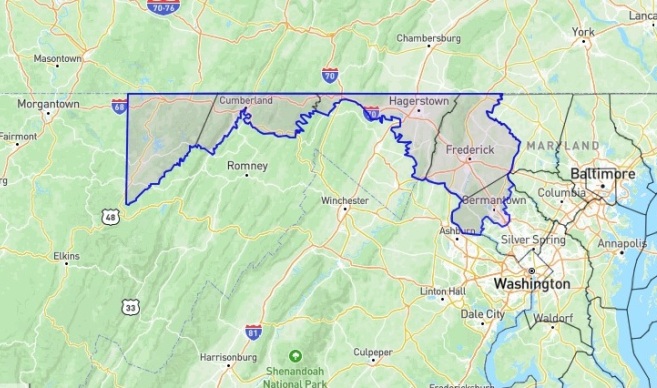
In Maryland on May 14, liberal women swept the Democrat primaries for open seats in the U.S. Senate and House districts 3 and 6. We've already profiled the Senate contest, and as far as House races only the primary in CD-6 was of any significant interest to Republicans; it's their one slim chance of picking up a Democrat-held House seat in Maryland, where liberals currently occupy 7 of the 8 districts thanks in at least a couple of cases to hyper-partisan Democrat gerrymandering. CD-6 is the most gerrymandered of them all.

Photo credit: bacon.house.gov
Nebraska: the state-level GOP organization which, according to surely unbiased media reports, "was taken over by those loyal to former President Donald Trump during a contentious state convention" -- that happened back in 2022 -- decided to oppose (or ignore) all 5 of the Republican incumbents who were running for federal office. This is quite good since pretty much all 5 incumbents are squishes, but unfortunately the tactic proved to be utterly ineffective. For one thing, actions (especially $$$) speak far louder than words, and these were only words; the conservative challengers collectively had about $1.50 to work with here. Also, making the announcement regarding endorsements just moments before the voters had to head to the polls was a great way to make sure that as few people as possible got the message.
The NEGOP made no endorsement in the races involving Fischer and Flood, and they endorsed challengers to Ricketts, Bacon and Smith. All 5 incumbents did face primary opposition -- such as it was.

Photo credit: National Review
West Virginia, where energetic conservative Senate candidate Alex Mooney was swamped by doddering moderate Governor Jim Justice in Tuesday's Senate primary as was expected. "Terrifying and loathsome" is pretty much how the GOPe would describe Mooney. We'd describe him as "conservative". The GOPe would agree, and that's their main problem with the 5-term congressman.
It's fashionable for liberal elitists to refer to West Virginians using words like "hillbilly" and "inbred" because, to them, hatred of White people is always acceptable. Though we reject their racism, it must be conceded that West Virginia politics does sometimes have a certain inbred-type quality to it: In the CD-1 Republican primary, it was incumbent Carol Miller vs. former J6 political prisoner ("rioter", in biased liberal media parlance) Derrick Evans, age 39, who was briefly a state legislator before being forced to vacate the premises after his politically-motivated conviction in 2021. Miller, who won this primary with 63% of the vote, is a geriatric 73-year-old moderate currently in her third term in the House. She is the daughter of former conservative Ohio congressman Samuel Devine who was in Congress from 1959-1982. Miller's son, a car dealer by trade, was looking to extend the family's political dynasty by becoming Governor. However Chris Miller finished in third place in the 2024 GOP primary with about 20% of the vote and his political career is likely stillborn. Arch Moore, a moderate Republican like Jim Justice and Carol Miller, many moons ago had a long and legendary political career including 6 terms in the U.S. House and two distinct stints as Governor (he ran 5 times and won 3). Moore was first elected to office in 1952 and last ran in 1988 when he lost his bid for a fourth term as Governor. His daughter, Shelley Moore Capito, is a moderate-liberal Senate Republican and has been in Congress for nearly a quarter-century since being first elected to the House in 2000 in an upset victory over a megabucks Democrat trial lawyer who outspent her by a 6:1 margin. Justice's imminent elevation to the Senate in November will ensure that this solidly Republican state has two Republicans -- but no conservatives -- in that body for the first time since 1958. The last time West Virginia had two elected (as opposed to appointed) Republicans in the U.S. Senate was 93 years ago. Capito's son, former state legislator Moore Capito, ran for Governor this year and came in second to state Attorney General and former Senate candidate Patrick Morrisey in the GOP primary. The younger Capito compiled a somewhat conservative record as a member of the state House of Delegates from 2016-2023. Shelley Capito's nephew, state Treasurer Riley Moore (the true conservative politician in the family), won the 5-way primary to replace Alex Mooney in the U.S. House. After he wins the general election easily in November, it remains to be seen whether his voting record will be as conservative as expected. There's a good chance that he will at least start out that way, as many freshmen GOP legislators do. Tags:
2024
Indiana
Nebraska
West Virginia
Maryland
| |||||||||||||||||||||||||||||||||||||||||||||||||||||||||||||||||||||||||||||||||||||||||||||||||||||||||||||||||||||||||||||||||||||||||||||||||||||||||||||||||||||||||||||||||||||||||||||||||||||||||||||||||||||||||||||||||||||||||||||||||||||||||||||||||||||||||||||||||||||||||||||||||||||||||||||||||||||||||||||||||||||||||||||||||||||||||||||||||||||||||||||||||||||||||||||||||||||||||||||||||||||||||||||||||||||||
| 11/8/2023: Election 2023 -- It Wasn't ALL Bad News [RightDataUSA] | |||||||||||||||||||||||||||||||||||||||||||||||||||||||||||||||||||||||||||||||||||||||||||||||||||||||||||||||||||||||||||||||||||||||||||||||||||||||||||||||||||||||||||||||||||||||||||||||||||||||||||||||||||||||||||||||||||||||||||||||||||||||||||||||||||||||||||||||||||||||||||||||||||||||||||||||||||||||||||||||||||||||||||||||||||||||||||||||||||||||||||||||||||||||||||||||||||||||||||||||||||||||||||||||||||||||
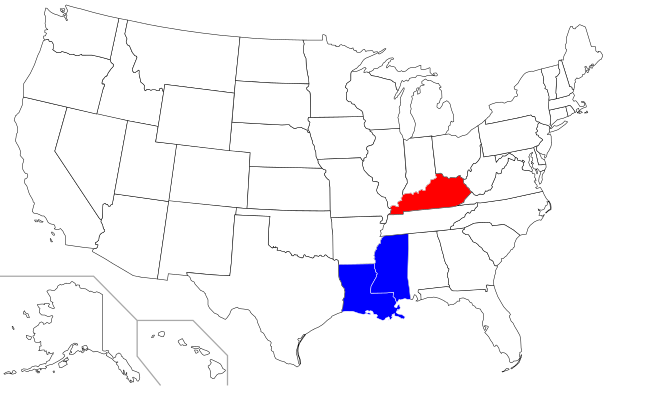
Yesterday's outcomes were almost entirely predictable yet were considered disappointing by the good people of America -- the same phenomenon as occurred in 2022 when the mis-named "Red Wave" never materialized and even positive developments were considered to be crushing defeats because those positive outcomes did not occur on the massive scale which many people ridiculously expected. Now on the positive side, Mississippi Governor Tate Reeves (R squish) defeated a faux-moderate Democrat who claimed to be kin to the beloved peanut-butter-and-banana sandwich eater, Elvis Presley. Apparently that's worth some votes in Mississippi. Republicans also increased their already-substantial majorities in the state House and Senate and swept all statewide offices. In Suffolk County, New York (Long Island) the GOP cruised to a "landslide" 56% victory in the race for County Executive, which means that Republicans now hold 100% of the important offices on Long Island including the area's four seats in Congress (for one more year). GOP gains in 2021 on Long Island foreshadowed congressional success here in 2022; this win in 2023, unfortunately, will very likely not mean anything as far as GOP chances of success on Long Island in 2024. Another race which was perhaps not of national import, but was something we touched on previously: A significant upset occurred in a local race in Allegheny County, PA (Pittsburgh) where long-term incumbent Democrat Stephen Zappala -- now running as a Republican -- defeated ultra-liberal Soros stooge Matt Dugan for District Attorney. Pending any post-election shenanigans by Democrat vote-counters, anyway. Results in Pennsylvania very often change significantly after election night as more mail-in ballots are This happy result in the D.A. contest took place even as Democrats were sweeping the rest of the county offices, as always, though the race for County Executive was closer than usual. A moonbat Democrat won by barely 2% in a county where Democrats outnumber Republicans 2:1. The Rats, who have re-elected Mr. Zappala every 4 years since he first took office in the late 1990s, have suddenly discovered some issues with him, now that he is a Republican albeit in name only. They tried the always-popular Race Card, accusing Zappala of desiring to bypass the black (Democrat, obviously) mayor of Pittsburgh and take control of the police department; they also falsely accused him of going easier on White criminals than black ones. The Dugan campaign, which needless to say outspent Zappala exponentially, also dredged up a tangentially abortion-related case from over 15 years ago in which Zappala's office charged a woman who'd had a miscarriage with a crime because she then kept the fetus in a freezer. The resurrection of this story was meant to, and did, trigger the pro-abortionists who don't wish to suffer any consequences regarding their own dead fetuses. Despite the massive Soros-funding advantage for the Democrat woketard, Zappala appears to have prevailed yesterday 51.6% to 48.4% with an estimated 30% of Zappala's support coming from Democrats. When we referenced this election and the possibility of a miracle upset previously, the hypothesis was that perhaps blue-collar moderate Democrats would cross over to assist Zappala. In light of recent events in Gaza and the unwavering Hamas terrorist support from the national Democrat party -- including their local racist Congresswoman -- we surmised that Allegheny County Jews, particularly in the Squirrel Hill area of Pittsburgh, might be sufficiently appalled to do something other than vote straight-ticket D for a change, even though yesterday's elections had nothing to do with Israel. So what did those voters do? Squirrel Hill is contained within the Fourteenth Ward of the city of Pittsburgh. For some context, in 2020 that area voted soundly against President Trump by a margin of 70% -- it was 84% for Biden, 14% for Trump. In 2016, that region's love for Hillary and hatred of Trump was expressed in nearly identical proportions (83% Hillary, 14% Trump). Yesterday the vast majority of Squirrel Hill voters again showed themselves to be atheistic, secular, ultra-liberal and self-loathing -- they are not concerned one whit about Israel as long as Netanyahu is in charge -- by demonstrating their allegiance to the Democrat party. But not by quite the normal amount. There was approximately an 11-point swing to the right in the Fourteenth Ward, with Dugan getting 74% of the vote to Zappala's 26%. Eleven points may not sound like a lot, but in this area it is significant. In terms of raw votes, Zappala got at least 1,500 more votes in the Fourteenth Ward than he would have if the usual percentages had applied. That number by itself did not alter the outcome of this election, however it was a welcome (though almost certainly temporary) development. Tags:
2023
Kentucky
Missisippi
New Jersey
Virginia
Abortionist
Ohio
Daniel Cameron
Pittsburgh
| |||||||||||||||||||||||||||||||||||||||||||||||||||||||||||||||||||||||||||||||||||||||||||||||||||||||||||||||||||||||||||||||||||||||||||||||||||||||||||||||||||||||||||||||||||||||||||||||||||||||||||||||||||||||||||||||||||||||||||||||||||||||||||||||||||||||||||||||||||||||||||||||||||||||||||||||||||||||||||||||||||||||||||||||||||||||||||||||||||||||||||||||||||||||||||||||||||||||||||||||||||||||||||||||||||||||
| 7/18/2023: [Montana] Meet the Republicans trying to beat Tester, Manchin, and other vulnerable Senate Democrats [Washington Examiner] | |||||||||||||||||||||||||||||||||||||||||||||||||||||||||||||||||||||||||||||||||||||||||||||||||||||||||||||||||||||||||||||||||||||||||||||||||||||||||||||||||||||||||||||||||||||||||||||||||||||||||||||||||||||||||||||||||||||||||||||||||||||||||||||||||||||||||||||||||||||||||||||||||||||||||||||||||||||||||||||||||||||||||||||||||||||||||||||||||||||||||||||||||||||||||||||||||||||||||||||||||||||||||||||||||||||||
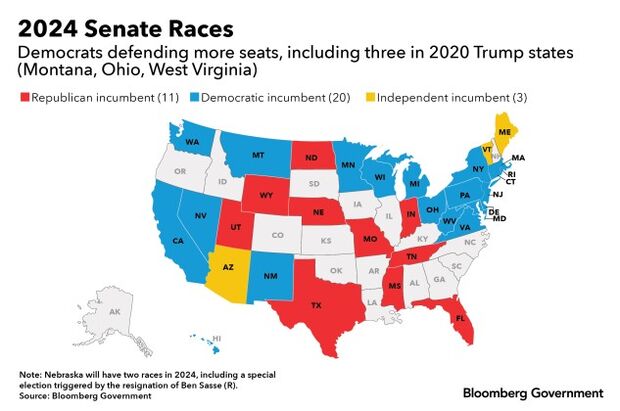
Photo credit: Bloomberg Government
The first paragraph of the article, mainly telling us what we already knew: Tags:
Senate
2024
Montana
Ohio
West Virginia
Democrat mega-$$$$ advantage
| |||||||||||||||||||||||||||||||||||||||||||||||||||||||||||||||||||||||||||||||||||||||||||||||||||||||||||||||||||||||||||||||||||||||||||||||||||||||||||||||||||||||||||||||||||||||||||||||||||||||||||||||||||||||||||||||||||||||||||||||||||||||||||||||||||||||||||||||||||||||||||||||||||||||||||||||||||||||||||||||||||||||||||||||||||||||||||||||||||||||||||||||||||||||||||||||||||||||||||||||||||||||||||||||||||||||
| 7/3/2023: Senate rankings: five seats most likely to flip [The Hill] | |||||||||||||||||||||||||||||||||||||||||||||||||||||||||||||||||||||||||||||||||||||||||||||||||||||||||||||||||||||||||||||||||||||||||||||||||||||||||||||||||||||||||||||||||||||||||||||||||||||||||||||||||||||||||||||||||||||||||||||||||||||||||||||||||||||||||||||||||||||||||||||||||||||||||||||||||||||||||||||||||||||||||||||||||||||||||||||||||||||||||||||||||||||||||||||||||||||||||||||||||||||||||||||||||||||||
Photo credit: Matt York, Associated Press
"The Hill", of all sources, contends that every one of the five most allegedly endangered Senate seats up in 2024 are currently held by Democrats! The five are: West Virginia, Montana, Ohio, Arizona and Wisconsin. We know that's hardly wishful thinking on the part of that leftist site, but are these pickups actually realistic or is this just a lot of crocodile tears to go with the veiled warning to Democrats to get busy doing whatever is necessary (wink, wink) to keep those seats, especially with Senate control at risk? Tags:
Senate
2024
West Virginia
Slam dunk
Montana
Ohio
Arizona
Wisconsin
Wishful thinking
Michigan
Nevada
| |||||||||||||||||||||||||||||||||||||||||||||||||||||||||||||||||||||||||||||||||||||||||||||||||||||||||||||||||||||||||||||||||||||||||||||||||||||||||||||||||||||||||||||||||||||||||||||||||||||||||||||||||||||||||||||||||||||||||||||||||||||||||||||||||||||||||||||||||||||||||||||||||||||||||||||||||||||||||||||||||||||||||||||||||||||||||||||||||||||||||||||||||||||||||||||||||||||||||||||||||||||||||||||||||||||||
| 4/26/2023: [West Virginia] Joe Manchin is a dunce [Hot Air] | |||||||||||||||||||||||||||||||||||||||||||||||||||||||||||||||||||||||||||||||||||||||||||||||||||||||||||||||||||||||||||||||||||||||||||||||||||||||||||||||||||||||||||||||||||||||||||||||||||||||||||||||||||||||||||||||||||||||||||||||||||||||||||||||||||||||||||||||||||||||||||||||||||||||||||||||||||||||||||||||||||||||||||||||||||||||||||||||||||||||||||||||||||||||||||||||||||||||||||||||||||||||||||||||||||||||
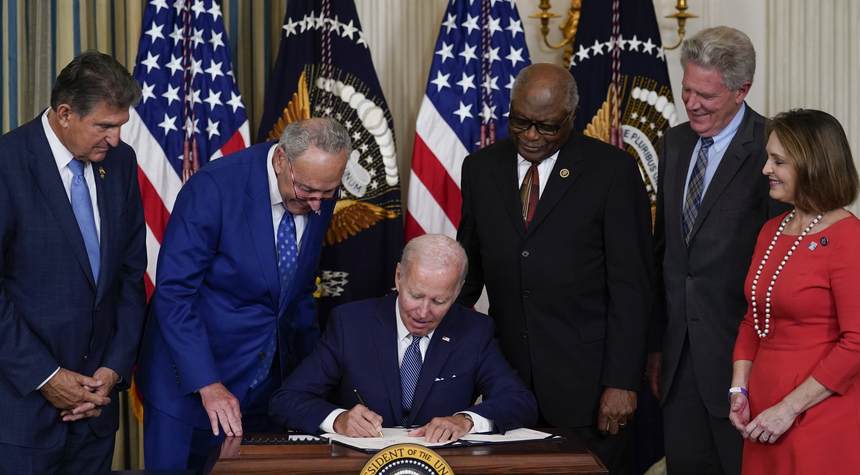
Photo credit: AP Photo/Susan Walsh
Actually, that's one thing he's not. The article claims that Manchin is regretting his high-profile vote which singlehandedly provided the margin for passage of the Democrats' ludicrously-named "Inflation Reduction Act" last August. But he knew exactly what he was doing at the time, and only now that the 2024 campaign season is beginning to get underway is Manchin feeling a little heat at home in West Virginia. He pretends to be a thorn in the side of his party, but when the chips are down he always comes through for the leftists. Tags:
Phony "moderate"
Joe Manchin
West Virginia
2024
Alex Mooney
Conservative
Jim Justice
RINO
| |||||||||||||||||||||||||||||||||||||||||||||||||||||||||||||||||||||||||||||||||||||||||||||||||||||||||||||||||||||||||||||||||||||||||||||||||||||||||||||||||||||||||||||||||||||||||||||||||||||||||||||||||||||||||||||||||||||||||||||||||||||||||||||||||||||||||||||||||||||||||||||||||||||||||||||||||||||||||||||||||||||||||||||||||||||||||||||||||||||||||||||||||||||||||||||||||||||||||||||||||||||||||||||||||||||||
| 1/13/2023: Youngkin's political brand at risk after GOP losses in Virginia [The Hill] | |||||||||||||||||||||||||||||||||||||||||||||||||||||||||||||||||||||||||||||||||||||||||||||||||||||||||||||||||||||||||||||||||||||||||||||||||||||||||||||||||||||||||||||||||||||||||||||||||||||||||||||||||||||||||||||||||||||||||||||||||||||||||||||||||||||||||||||||||||||||||||||||||||||||||||||||||||||||||||||||||||||||||||||||||||||||||||||||||||||||||||||||||||||||||||||||||||||||||||||||||||||||||||||||||||||||
We were told one year ago that the magnificent GOP sweep in Virginia in 2021 was largely the result of learning from the nationwide debacle of 2020 and having GOP poll watchers everywhere in order to minimize Democrat vote fraud. Furthermore, that "Virginia model" for ensuring election integrity was going to be implemented nationwide, and no longer would the Democrats so easily be able to commit massive statewide fraud in places like Arizona, Georgia, Pennsylvania, Michigan, etc. Tags:
Virginia
Special election
State Senate
Glenn Youngkin
| |||||||||||||||||||||||||||||||||||||||||||||||||||||||||||||||||||||||||||||||||||||||||||||||||||||||||||||||||||||||||||||||||||||||||||||||||||||||||||||||||||||||||||||||||||||||||||||||||||||||||||||||||||||||||||||||||||||||||||||||||||||||||||||||||||||||||||||||||||||||||||||||||||||||||||||||||||||||||||||||||||||||||||||||||||||||||||||||||||||||||||||||||||||||||||||||||||||||||||||||||||||||||||||||||||||||
| 11/29/2022: [Virginia] House Democratic Rep. Donald McEachin dies at 61 [ABC27] | |||||||||||||||||||||||||||||||||||||||||||||||||||||||||||||||||||||||||||||||||||||||||||||||||||||||||||||||||||||||||||||||||||||||||||||||||||||||||||||||||||||||||||||||||||||||||||||||||||||||||||||||||||||||||||||||||||||||||||||||||||||||||||||||||||||||||||||||||||||||||||||||||||||||||||||||||||||||||||||||||||||||||||||||||||||||||||||||||||||||||||||||||||||||||||||||||||||||||||||||||||||||||||||||||||||||
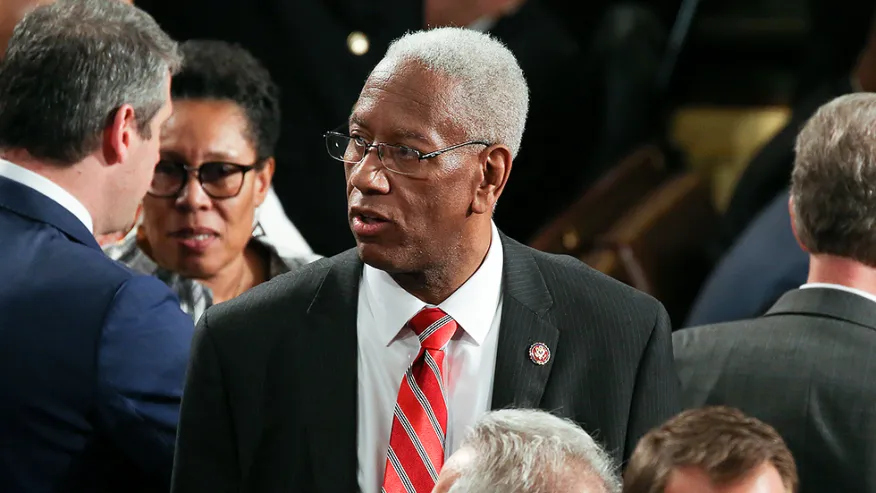
Photo credit: abc27.com
Myth #1: Republican Governor Glenn Youngkin gets to appoint a replacement, which means the GOP gains a seat!!! Tags:
U.S. House
Virginia
Special election
2023
| |||||||||||||||||||||||||||||||||||||||||||||||||||||||||||||||||||||||||||||||||||||||||||||||||||||||||||||||||||||||||||||||||||||||||||||||||||||||||||||||||||||||||||||||||||||||||||||||||||||||||||||||||||||||||||||||||||||||||||||||||||||||||||||||||||||||||||||||||||||||||||||||||||||||||||||||||||||||||||||||||||||||||||||||||||||||||||||||||||||||||||||||||||||||||||||||||||||||||||||||||||||||||||||||||||||||