| 11/20/2025: Senate Prospects For 2026: Part Two, Voting Schemes and Pipe Dreams [RightDataUSA] |
We've already covered the eight U.S. Senate seats which have the greatest probability of changing hands in 2026. The list includes 3 seats currently held by Democrats and 5 which have GOP incumbents. Most of the other 27 Senate seats which will have elections next year appear to be perfectly safe for the party which holds them. A few others fall just short of "perfectly safe".
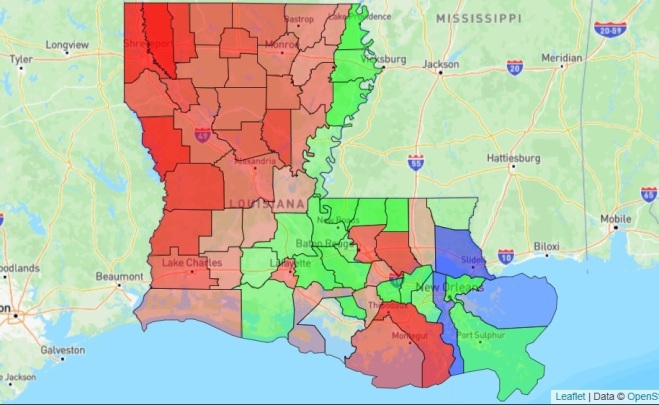
Louisiana gubernatorial jungle primary, 1987
Louisiana:
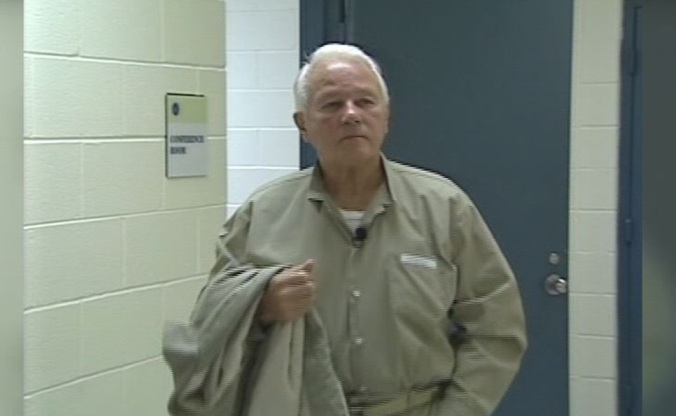
Photo of inmate No. 03128-095 from wwltv.com
What really triggered Edwards was the February, 1972 gubernatorial race, in which he first won the Democrat primary against over a dozen other candidates (but did not even get 25% of the vote) and then narrowly prevailed in a grueling runoff against Bennett Johnston and then had to face Republican David Treen in the general which turned out much closer than expected. Treen had cruised easily through the GOP primary and did not need to endure any runoff. So why, Edwards asked, should the vastly outnumbered Republican party be guaranteed a spot on a general election ballot like in every other state, while Democrats had to face as many as two bruising contests just to get to that same spot?
As of 2004 the tide had turned, and Democrats (and liberal Republicans) knew it. Then came the mass exodus of New Orleans Democrats as the result of Hurricane Katrina in 2005; New Orleans was already in population decline but the hurricane momentarily accelerated the process. From that point forward it has been Democrats who almost always find themselves on the outside in a general election, not simply because New Orleans temporarily lost about 100,000 potential voters, but because the general preference of Louisiana voters has done a 180-degree turn away from Democrats and towards Republicans. Since 2007 only Dirty Mary Landrieu in 2008 and John Bel Edwards (fluke wins in 2015 and 2019) have been able to prevail statewide as Democrats in Louisiana. Liberal Republicans like Bill Cassidy have (along with Democrats) lately decried the jungle primary, and in 2024 the state legislature passed a bill which reverts to closed, single-party primaries for elections for federal offices effective as of 2026; elections for state and local office in Louisiana will continue with the jungle primary. The new scheme is a "win" for liberals of both parties: Democrats get a guaranteed spot on a general election ballot; RINOs no longer need to deal with Democrats taking votes from them in a primary, and thus stand a better chance against real Republicans. In a supposedly "closed" GOP primary, Cassidy will receive a higher percentage of votes than he would in a jungle. He will be the winner if several conservative candidates split the right-wing vote while Cassidy has all of the left-wing votes for himself. Most likely, however, Cassidy will still need to survive a primary runoff. That won't be as difficult as it may sound. One very important provision of the new law which eliminated the jungle primary is that independent voters -- and there are plenty of those in Louisiana (nearly 30%) -- can cast a ballot in whichever primary they choose. Take a bunch of "moderate" independents, add in some Democrat voters who switch and become Republicans temporarily, and RINOs are suddenly far less endangered than they were before. If Cassidy's fate was decided only by true Republicans, it wouldn't be pleasant for him. Cassidy's #1 opponent at the moment is state Treasurer John Fleming, a 74-year-old Republican. Democrats have nobody worth mentioning. Fleming served 4 terms in the U.S. House from the 4th District from 2009-2016; the guy who replaced Fleming in that district in 2016 is now the Speaker of the House. Fleming is a very solid conservative, and if other conservatives stay out of the May, 2026 Senate primary, Fleming has an excellent chance to win. November would be a formality. But the primary will not be so simple, and that works to the advantage of RINO incumbent Cassidy because the non-RINO primary vote will be fractured. Other prominent candidates include first-term state Senator Blake Miguez, who is a moderate-conservative; and St. Tammany Parish councilwoman Kathy Seiden, who is a young, attractive Christian conservative. 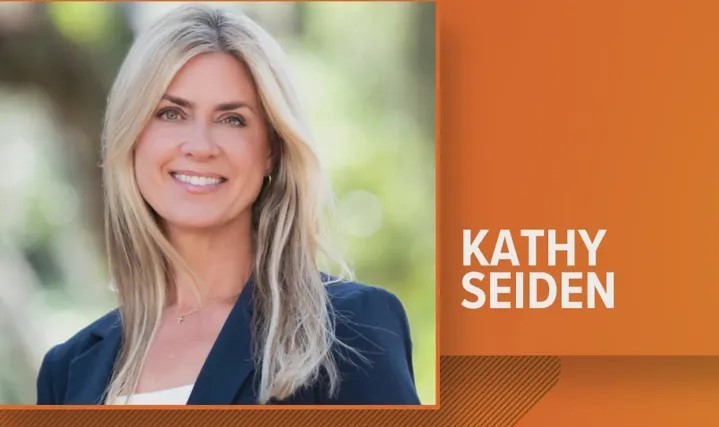
Photo credit: wwltv.com
Cassidy has a major cash advantage, Miguez and Fleming are building their war chests, and Seiden has only recently thrown her hat into the ring. Whoever wins the GOP primary will be Louisiana's next U.S. Senator. Miguez, though more of a centrist, will still take more votes from Fleming and Seiden than he will from Cassidy. Best case scenario is that at least one of the two actual conservatives makes the runoff. With one Democrat now guaranteed to be on the general election ballot (thanks again, Louisiana RINOs) billionaire ActBlue contributors may go all-out to try to steal this seat, but this is one state where it is very unlikely that they will succeed.
Alaska: 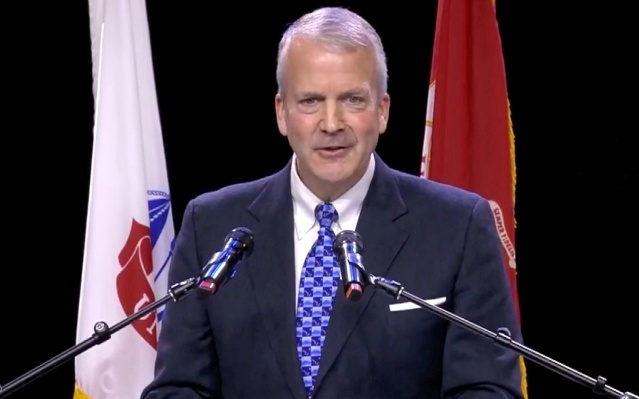
Democrats have nobody yet for this race in what people falsely assume is a Republican state; the GOP has only 24% of voter registrations in Alaska while 59% are registered independents. But the Democrats believe (and left-wing polls back them up) that fake-moderate ex-congresswoman Mary Peltola would be a formidable opponent against incumbent Republican Dan Sullivan. Sullivan, an actual moderate, was first elected to the Senate in 2014 when he defeated incumbent Democrat Mark Begich and then was re-elected in 2020 by an unimpressive margin over big-spending liberal Al Gross.
Kentucky: 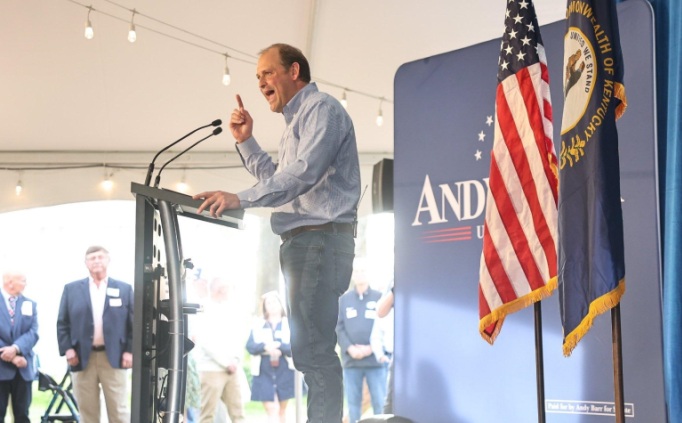
Photo credit: Lexington Herald Leader
The Bluegrass State is wide open due to the long-overdue retirement of Mitch McConnell. The best-known candidates in the Republican primary are moderate congressman Andy Barr and former Attorney General Daniel Cameron. Barr has represented the Lexington-area district in Congress since 2013 and he's turned what was once a marginal House seat into a rather safe one which Democrats no longer seriously go for in most elections; they are putting it back on their radar in 2026, however. Cameron, elected as A.G. in 2019, was seen by some on the right as insufficiently tough on Democrat crimes while in office, and his bid to move up to Governor ended dismally when he was totally outclassed (and vastly outspent) in 2023. There is also businessman Nate Morris running on the GOP side, and he is definitely the most conservative option of the three. Barr is currently the leader in the fundraising portion of the race.
A recent addition on the Democrat side, presumably for additional comic relief, is horse trainer Dale Romans. Horses are big in Kentucky, and this guy's full of as much horseshit as any of them. He also wants to be the W.C.H. candidate in the contest, and describes himself as an "independent" Democrat even as he spouts the same nonsense as all other (presumably non-independent) Democrats. Bernie Sanders is an "independent" too. McGrath is the most likely of the above to be the Democrat nominee, but nobody currently has any illusions that she will win. Morris may have a better shot than anticipated on the GOP side, but a squish like Barr probably has the best chance of winning a general election, and therefore the big money and big endorsements will be behind him. Cameron is currently being slimed with unproven allegations of misconduct while Attorney General, and he is also a proven statewide loser. Cameron appears to be the favorite to finish third in the GOP primary. Minnesota: 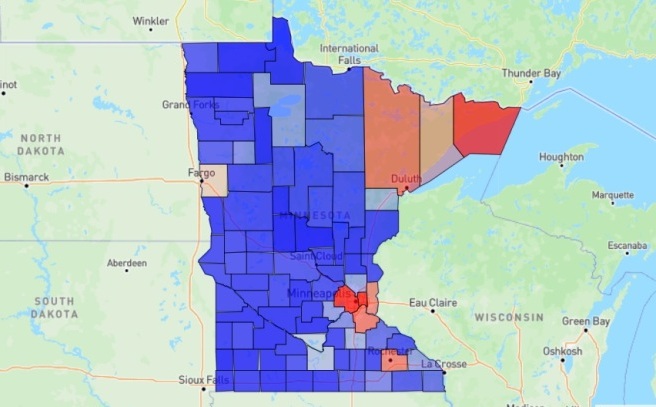
2024 presidential results in Minnesota
This state, like Virginia (see below) is nothing but a Republican pipe dream. The congressional delegation is always pretty well balanced, either 4-4 or 5-3 every election since 2000. The state House and state Senate are very close. Minnesota doesn't register voters by party, but a company whose business it is to estimate party breakdowns calculates that Minnesota is one-third Democrat, one-third Republican and one-third independent or minor parties. This may be an oversimplification, but the Twin Cities and their suburbs (at least the first two "rings") are terrible, the rest of the state is fine. The first part of that sentence is definitely true, anyway.
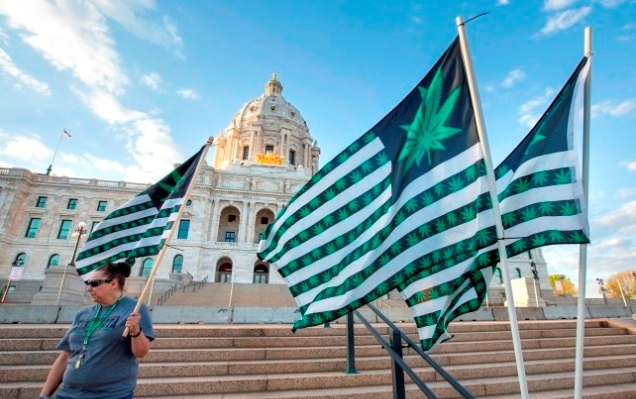
Photo credit: house.mn.gov
Speaking of "pipe dreams". . . one explanation for some of the previously close outcomes is -- or was -- the presence of doper parties on the ballot. The "Grassroots-Legalize Cannabis" party and the "Legal Marijuana Now!" party are both recognized political entities in Minnesota, but they ceased fielding candidates after 2022. That's because they no longer have any reason to do so; in 2023 the Democrat legislature passed a very lenient law which legalizes cannabis for any type of use, not just medicinal. The fact that the doper parties are now obsolete helps Democrats, because these parties were regularly siphoning off thousands of left-wing votes in major elections.
Republicans are pretending that they have a chance to pick up the Minnesota Senate seat in 2026. It is an open seat, being vacated by Democrat Tina Smith, who is retiring. Smith, who compiled a nearly 100% liberal rating while in the Senate, was first appointed in 2018 when Democrats forced another liberal Democrat, sexual predator Al Franken, to resign. Smith's most recent election in 2020 was a good example of how Democrats were once hindered electorally, as two stoner candidates combined to take 7.7% of the vote away from her. So Smith only won by about 5 points instead of 12 or 13 points. The 2026 Democrat primary will be between Lt. Governor Peggy Flanagan and congresswoman Angie Craig. Flanagan has some problems, such as financial improprieties in her office, and being endorsed by Bernie Sanders; Craig is one of those lifelong liberals who suddenly sprints hysterically towards the center when seeking higher office. There's a 98% chance (rounding down) that one of these two will be the next ultra-liberal U.S. Senator from the state of Minnesota. Ex-professional basketball player Royce White ran for the Senate in 2024 in Minnesota against Amy Klobuchar, and the Republican was stomped by over 15 points, a good example of a margin of Democrat victory when the dopers no longer split the left-wing vote. He is running again in 2026. White moved quickly across the political spectrum, going from left-wing hero in 2020 when he was leading Black Lives Matter protests after the death of "St. Floyd of Fentanyl" (White does have a history of mental illness); he's recovered from that, and is now described as a "right-wing populist". White has just as much chance of winning in 2026 -- none at all -- as he had in 2024. And he is the probable front-runner among Republicans, which shows just how much of a barren wasteland Minnesota is for the GOP. None of the state's 4 moderate Republican congressmen want any part of this race either. 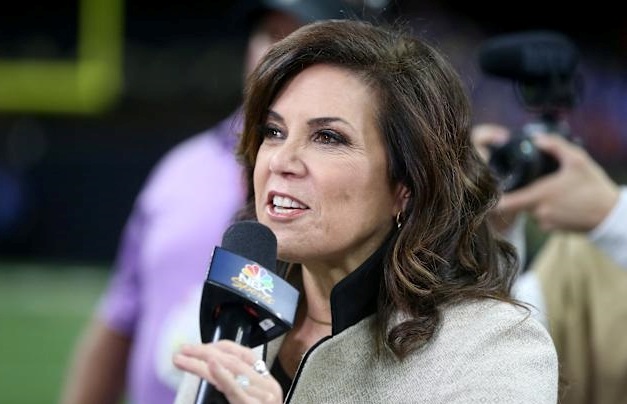
Photo credit: yahoo.com
This foregone conclusion of an election might be spiced up a bit if ex-sports broadcaster Michele Tafoya were to enter the race on the GOP side. Tafoya was a long-time sideline reporter for NFL games, and during her career she was employed by several networks including CBS, ESPN and NBC. She retired from that profession in January, 2022; the last game she worked was Super Bowl LVI.
Nebraska: 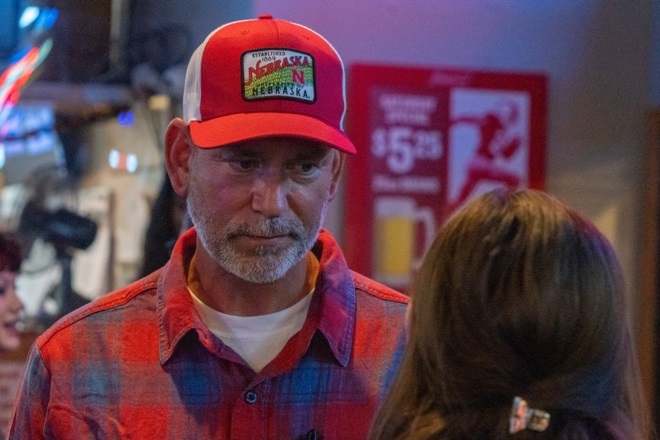
Photo credit: Zach Wendling/Nebraska Examiner
Democrat-in-disguise Dan Osborn is the Great "Independent" Hope for the left in the state of Nebraska. Fresh off of a defeat in the 2024 Senate election against incumbent GOP squish Deb Fischer in which he came closer than some expected, Osborn is rested and ready to give it another go in 2026. Osborn took all of the Democrat money he could get in 2024, but concealed his true political identity by refusing to accept the Democrat party label which is repugnant in the Cornhusker State outside of Omaha and Lincoln. Not even including all of the supposedly-independent liberal cashflow coming from outside the state, Osborn's fundraising dwarfed that of Fischer. Numerous polls showed a close race in 2024, and some even had Osborn prevailing by a small amount. Osborn won the two big liberal cities and lost everywhere else; the final outcome was a 6.7% victory for the Republican. Only one or two forecasters actually got it right; the other polls (nearly all of which were paid for by Osborn's campaign) were nothing but wishful thinking, propaganda and hot air.
Virginia: One last word about a ridiculous GOP pipe dream state: there are probably some folks out there who are still in disbelief regarding the 2025 election results in Virginia. Unwilling to accept the reality that the Old Dominion is not remotely competitive anymore, they may think that outgoing Republican Governor Glenn Youngkin could somehow repeat his fluke win from 2021 in the 2026 Senate race against well-entrenched liberal Mark Warner. Youngkin is a good man, and he stood up just recently against Virginia Democrats' attempt (which will succeed) to gerrymander the state's congressional districts and disenfranchise Republicans, costing them 2 or perhaps 3 seats. Youngkin is not a stupid man, and to all indications will not be entering a Senate race that he is extremely unlikely to win. If Youngkin declines, Republican pickup chances of the Virginia Senate seat drop from maybe 20% to absolute zero. Drop the pipe, wake up from the dream, and look elsewhere for potential Republican pickups. Tags:
2026
Senate
Louisiana
Alaska
Kentucky
Minnesota
Nebraska
Virginia
|
| 8/22/2024: House Battlegrounds -- Alaska and Washington [RightDataUSA] |
In 2020 the voters of Alaska allowed themselves to be bamboozled by a slick advertising campaign bankrolled by tons of out-of-state liberal money, and approved Rigged Choice Voting (RCV) by the margin of 50.5% to 49.5%; it took effect with the 2022 elections. Under RCV as it is still being used in Alaska in 2024, all candidates for an office run together on a single primary ballot, with the top 4 -- regardless of party -- advancing to the general election ballot. If no candidate gets over 50% on the "first" ballot in November, votes are shuffled around and many voters are disenfranchised, and then the Democrat (or ultra-liberal Republican) wins. At least that's how it works in practice.
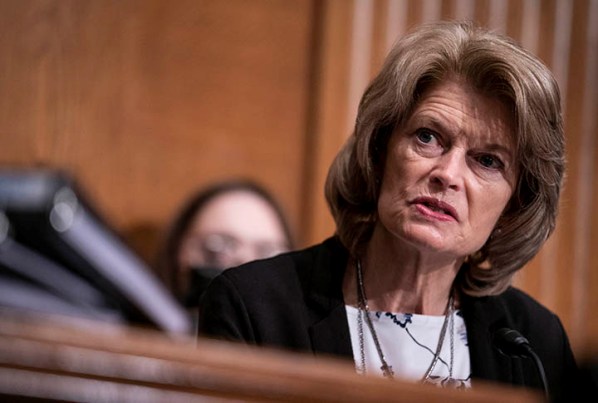
Photo credit: womenzmag.com
For example, RCV was directly responsible for the otherwise highly-unlikely Republican loss of the Alaska U.S. House seat in 2022, and this new convoluted way of counting votes assisted immeasurably with the Senate re-election of far-left "Republican" Lisa Murkowski over underfunded conservative challenger Kelly Tshibaka that year. Democrats did not even bother to contest that Senate election aside from the tiniest token effort, since Murkowski is for all intents and purposes one of them anyway; she votes more often with Democrats than she does with Republicans.
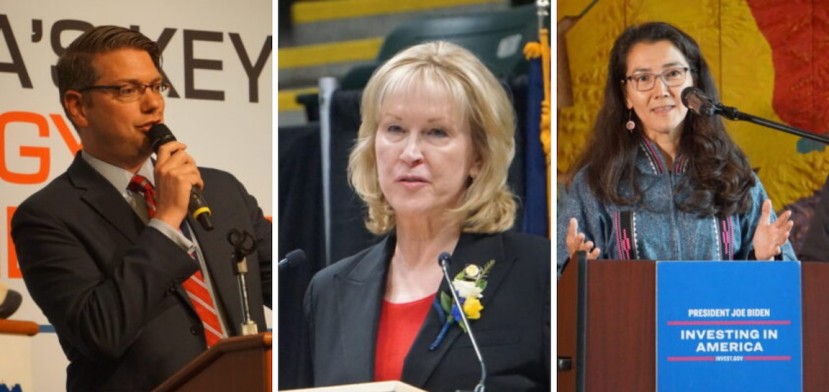
Photo credit: Yereth Rosen/Alaska Beacon)
Buyer's remorse regarding RCV has set in, and this November the repeal of that abomination will be on the ballot after withstanding court challenges from the left. That's fine, but Republicans on August 20 took one (perhaps) last opportunity to demonstrate their stupidity. They once again ran multiple candidates for the House -- Begich is back for another shot, opposed by gadfly candidate Nancy Dahlstrom -- and once again have created a damaging intra-party rift which is likely to be costly in November.

Photo credit: ustimespost.com
The state of Washington held its primary on August 6, but the deadline for vote-counting isn't until August 23. There were a few races worth noting in this all-mail voting state, including one which very well may continue past the stated deadline -- but only if the Republican erases the infinitesimal lead which a Democrat currently has. After all, it's a well-established state tradition that the result of a close election is not declared final until the Democrat wins (just ask Republican "Governor" Dino Rossi).

Photo credit: carboncredits.com
The real nailbiter of a race which is currently going on in Washington is for the office of Commissioner of Public Lands (CPL), which is wide open since the incumbent liberal Democrat commissioner, Hillary Franz, chose to run for Congress in Washington's 6th district instead. She lost her primary earlier this month and promptly blamed dark and evil forces for her defeat. Speaking of which, the easy winner in November in CD-6 will now be ultra-liberal Democrat Emily Randall, who will be a real barrier-breaker as the first Latina dyke ever to be elected to Congress.
Pederson ran against Franz in 2020 and lost by 13.5%. She has never held public office. Herrera is the Trump-hating former congresswoman and Impeachment RINO who was defeated in the 2022 primary election. She refused to endorse the conservative Republican (Joe Kent) who defeated her, and Kent went on to lose narrowly to Democrat Marie Gluesenkamp Perez -- another freshman who, like Alaska's Mary Peltola, has been furiously faking to the center in 2024 in a desperate bid to conceal her liberal leanings from the voters in her district. Kent has been magnanimous where Beutler was not, and he has endorsed his former opponent in her bid to become Washington's Commissioner of Public Lands. The top 3 finishers in the CPL race are listed above; the remaining votes are scattered among 4 candidates. Herrera and Pederson are the only two Republicans in the race; five Democrats split approximately 57% of the vote. If the Democrats quickly certify Upthegrove as the #2 finisher in the primary (which they will if he stays ahead; otherwise look for as many recounts as necessary) he will therefore be the clear favorite to win in November when the Democrats unite behind their guy. Having two GOP-ers on the ballot and zero Democrats, resulting in a guaranteed Republican win, would have been quite an accomplishment for the party. We'll find out shortly if that's allowed to happen. 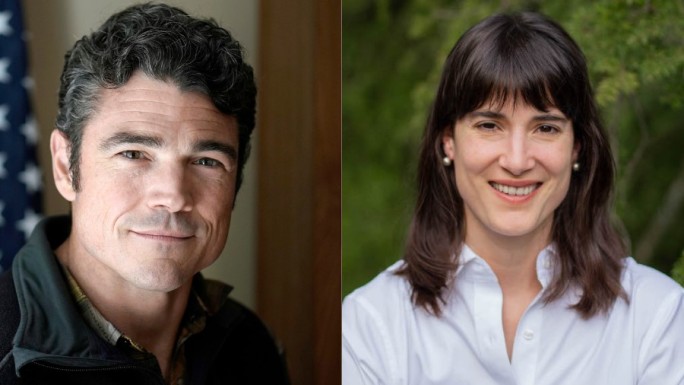
Photo credit: mynorthwest.com
Elsewhere in Washington, there were hotly-contested primary elections in the three districts (out of a total of 10) where Republicans have any real chance at victory in November.
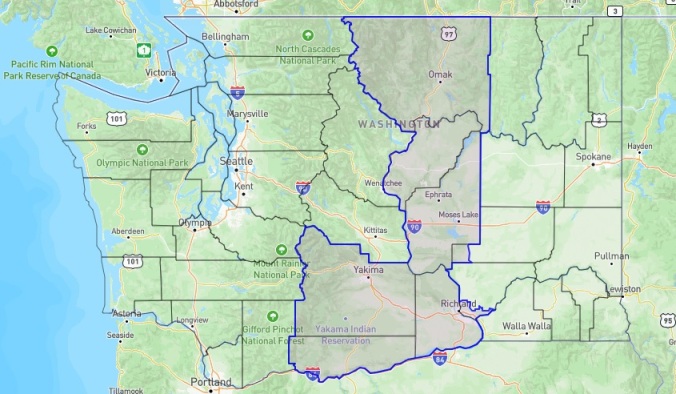
Washington congressional district 4
The highest-profile congressional primary in Washington took place in the solidly Republican (R+11) 4th district, which covers the central third of the state geographically, including Yakima and the Tri-Cities area. CD-4 is only 52% White and 40% Hispanic (nearly all of which are Mexicans) but the non-citizens tend to not vote, and those citizens who do vote lean staunchly to the right. No Democrat has exceeded 40% in a House election here since 1996, with the exception of 2006 when the Rats barely cleared that figure (40.1%).
Sessler ran for the CD-4 seat in 2022 and finished fourth in the primary, splitting the conservative vote with former gubernatorial candidate Loren Culp. Culp finished third, so only Newhouse and Democrat Doug White advanced to the general election. That outcome was quite the win-win for the GOPe and other leftists, with two conservatives biting the dust and two liberals moving on. A similar scheme was in the cards for 2024 as well, with the GOPe protecting Newhouse again by having former senatorial candidate Tiffany Smiley enter the race belatedly in order to siphon votes from Sessler. Smiley was obliterated in the 2022 U.S. Senate race vs. doddering ultra-liberal incumbent Patsy Murray, but in the process Smiley proved to be an attractive candidate (in maximum contrast to Murray; unfortunately the election wasn't a beauty contest) -- and more importantly Smiley showed a solid ability to fundraise. She actually raised several million more than Murray in terms of small donations, but Murray had the full weight of the ActBlue Democrat money launderers and lots of other billionaire/corporate funding. Plus, this is Washington after all -- it's not as if a Democrat Senate incumbent is going to lose no matter how much money any GOP challenger raises. Smiley was likely insinuated into the CD-4 House race by the GOPe this year with the hope that she could overwhelm Sessler in the $$$$ department, but she couldn't. Smiley tried to convince voters that she is a conservative but utterly failed to do that. Her past track record as a moderate, including endorsements from groups like the left-wing Log Cabin Republican homos, did not endear her to the voters. Smiley was eliminated from further contention with less than 20% of the vote. Sessler came in first with 33% and Newhouse received only 23%. This is the first time since 2014 that Newhouse has failed to finish first in the primary -- but he defeated a conservative Republican (former NFL tight end Clint Didier) that November too. Sadly, he'll probably survive again this year. Sessler's going to need damn near every one of Smiley's voters to flock to his side because Newhouse will get the 23% who went for Democrats in the primary. That plus his own 23% gets him real close. Ugh. 
Photo credit: jerrodforcongress.com
Sessler is a decorated Naval veteran (not some Stolen Valor coward like Democrat VP nominee Tampon Timmy Walz) who has also beaten Stage IV cancer which was said to be 95% terminal. He is a solid Christian conservative who describes himself as an American Patriot. Perhaps at this point you are beginning to understand why the GOPe fears Jerrod Sessler.

Photo credit: Outside Groove
As an aside, Sessler's campaign bio touches briefly on the fact that he is a "former NASCAR driver". It's hardly a big part of his list of qualifications, but it almost became a sticking point two years ago. Sessler was no national star as a driver; he participated in a small regional racing series which was under the auspices of NASCAR. [BTW, Sessler is the second ex-NASCAR driver running for the House this year as a Republican; we wrote about the other one here].
Tags: |